The Future of CSR Software: A Buyer’s Guide for 2025
Learn how to find the right features to support a new era of corporate giving and employee engagement

An introduction to the moment
As corporate social responsibility (CSR) programs mature, the technology that powers them needs to mature as well. In 2025, and beyond, CSR professionals will face new pressures, and they need technology that will help them live up to the increased demands.
Though CSR teams are used to answering to a range of stakeholders, in 2025 expectations have ratcheted up. Employees still expect corporations to show up for their communities. According to a recent report, 77% of Americans believe that corporations have a responsibility to contribute to social change. Corporate leaders agree. 91% of CEOs believe that their role is to protect local communities in the regions they operate.
But a rapidly changing political climate, a new legal landscape, and an environment of economic uncertainty has added new pressure points to CSR work in 2025. CSR teams must clearly prove the value of their programs. They have to do that while adjusting to new priorities and managing relationships with nonprofits that are likely facing steep budget cuts from federal sources.
To meet expectations, CSR teams need more support and resources. In 2023, one-in-five CSR professionals reported mental health concerns on account of rising job demands. And the pace has not slowed.
Good CSR software takes some of the load. It helps by making it easier to launch and track the impact of CSR programs. The right CSR software can also help you focus more on practicing good corporate citizenship, by removing the grunt work and making space for more strategic change management and relationship building.
And, as we'll get into, it's never been more important for CSR teams to think deeply and strategically about their programs. With the backlash against ESG and DEI, a transformed government and nonprofit landscape, and rising economic uncertainty, we're approaching an inflection point on how companies engage with the communities they're in. Your CSR software needs to match the moment. Before we get into the specifics of how, let's reflect on the trends influencing CSR practitioners today.
5 major trends impacting CSR today
The borders and expectations around CSR mirror today's most pressing social issues. They are constantly evolving. The trends shaping CSR right now are redefining best practices and what “good” CSR software means.
Backlash to DEI and ESG reshapes CSR programs
With a federal crackdown on DEI, equity work in the corporate space is shifting. Many business leaders are scaling back or de-prioritizing DEI efforts. Others are choosing to stay the course. Either route might include some turbulence.
The backlash to DEI is a reminder how swiftly the pendulum can swing. Only five years ago, many companies were scrambling to implement diversity programs and make statements about how they planned to fight racism. Now, many companies are rolling back those commitments.
Alongside the DEI backlash, anti-ESG laws are spreading across the country.
Today, DEI and ESG hold a different risk profile than they did in the past. CSR teams have to adjust. They need to get clear about how company leaders are prioritizing (or de-prioritizing) DEI and ESG, and keep their programs aligned to that vision. This might mean keeping programs in place, but shifting who they serve. Or changing language about how they talk about CSR work.
Of course, DEI and ESG aren't CSR. But they're closely related. CSR programs are bound to feel the shockwaves from the backlash. These shockwaves may influence business leaders' decision to invest in CSR software and their requirements for that software.
Delivering on and proving impact is non-negotiable
CSR programs have the potential to impact bottom line business metrics like customer loyalty, employee retention, and even productivity. But in 2025, potential is not enough. With the current global economic volatility and tightening budgets, CSR teams must be able to prove the specific ROI of their work rather than make vague gestures toward its impact.
The Association of Corporate Citizen Professionals (ACCP) recently put out a Making the Case for Social Impact toolkit. The toolkit lays out survey results and other data to help CSR teams justify their programs. Even if corporate leaders aren't pressing for answers now—CSR professionals need to be proactive about building the business case for their work.
On a recent episode of Impact Audio, Andrea Wood, president and CEO of ACCP, explored the data. “We have some data that shows that 95 percent of employees who have been surveyed think it's important for their employer to make a positive impact in their community—tying right back to why it's important for the business to be able to recruit and retain top talent,” she says. CSR professionals have to do the work to tie their programs to that impact.
With CSR teams stretched thin over the last few years, this focus on impact threatens to stretch them even thinner. Teams need to craft and run CSR programs, while also doing the work to prove that the programs are worthwhile. CSR software can help unload the manual labor of running programs and give you the data you need to build a clear story of impact.
Social and environmental causes are increasingly politicized
In 2025, many social and environmental causes that were considered nonpartisan in the past have become more divisive. Many companies are adjusting to this new landscape by either retooling their approach to communication or shifting their overall program strategy.
In the past, most companies who had CSR programs wanted to spread the word as widely as possible. But with the charged current political and social climate, many companies are shifting how they talk about their social impact work.
Some companies are simply changing the language they use to define programs so they can avoid high-profile terms like DEI and equity. Others are being a bit quieter, sharing information about their programs with employees, but not aiming to publicize their efforts. Andrea Wood, president and CEO of ACCP sees a shift in how companies build their messaging. “[Companies] may be a little quieter externally in how they talk about social impact,” she says.
The politicization of causes has also led some companies to hand more decision-making power over to their employees. Rather than the company taking a stand by directing money toward specific causes, they give their employees the power to choose. Under pressure to make a statement during the widespread Black Lives Matter protests, the game developer Valve decided to give each of their employees $10,000 to donate how they wished.
Democratizing corporate giving can be a win-win for this moment. Companies can continue their commitment to social good without making a grand statement. And employees feel a sense of empowerment as they direct funds to causes they care about.
CSR software must be designed to support employee-led efforts by catering to individual employees.
Artificial intelligence is here and it's unavoidable
AI is everywhere now, including embedded into CSR software. It's no longer a matter of if your organization will use AI, but how.
Already, AI is seeping into word processors, search engines, and more. It will become a part of everyday work in the coming months and years. Which means organizations need to think now, not later, about how they'll use AI in their own company. In 2025, your corporate social responsibility software will need to clarify its stance on AI. Our responsible AI principles lay out our measured approach.
Recently, we expanded on these principles with our AI hub, which contains all our AI-related content and an invitation to participate in our AI research. In 2025 and beyond, you'll need to choose a CSR platform that's thoughtful and transparent with their AI use.
Participation is a persistent challenge
Although the majority of employees want CSR programs, many employee giving and volunteering programs continue to struggle with participation.
In a recent Deloitte survey, 87% of respondents said workplace volunteer opportunities are a factor in their decision to stick with their current company or seek out a new role. But in the latest CECP report, volunteering programs only had a 23% participation rate. Giving programs are also struggling, with an average 20% participation rate.
For CSR leaders and program managers, it's essential to close the gap between the number of employees who are excited about CSR in theory and the number of them who actually show up to participate.
New technology can be transformational. The right CSR software can help shift programs from a company-centric approach to an employee-centered experience. It can connect giving to an employees' everyday work and bring programs into their flow. Rather than living on an island, CSR can become a core pillar of the employee experience. That's how you close the participation gap.
Evaluating CSR software in 2025
When evaluating CSR software, it's important to keep the above trends in mind and to think about the scope of your use case. Some CSR software is capable of delivering a very broad range of features, while others specialize to help companies with one type of CSR programs. Ideally, your CSR software helps strengthen the ties between your programs.
We break CSR programs up into three types:
- Community investment: Grantmaking, scholarships, awards, and other community-focused efforts.
- Employee volunteering: Efforts and initiatives driven by employees' donation of their time and/or expertise.
- Corporate giving: Company- and employee-fueled efforts that deliver funds to nonprofit organizations.
Keep the following in mind when shopping for CSR software that fits your own use case. Making the right choice can allow you to act quickly, pivot on the fly, and get the most out of your CSR efforts.
Security: A #1 feature for all use cases
No matter your use case, top-notch security is a must for any CSR software you choose.
The cost of the wrong software: Compromised data for millions of customers, as in the case of Blackbaud's breach in 2020.
Ask yourself:
- Is the platform encrypting information?
- What's the company's data storage policy?
- Are they SOC 2 Type 2 certified?
- Do they adhere to GDPR rules?
- What's their track record with customer data?
Dig deep and give security the attention it deserves. You and your customer's depend on it.

7 Features to look for in community investment software
It's not uncommon for community investment efforts—grantmaking and giving, scholarships, awards, etc—to require tons of paperwork and box checking, for both grantors and grantees. Ideal CSR software should streamline these processes and lower the applicant burden for applicants.
The following features can make that a reality.
1. Workflow automations
2. Built-in fraud prevention
Prioritize built-in fraud prevention with tools like personalized knowledge-based authentication quizzes, which require applicants to answer a few short questions about their personal and private history, or identity verification tools that match selfies taken in real time to government-issued IDs.
Features like these help you ensure that the money you send out reaches your intended recipients without creating extra work for applicants. Not to mention, fraud prevention will reduce the chances of eroding community trust through breaches or other costly incidents.
3. In-app communication
Find a solution with in-app communication which allows your team to communicate with each other and with applicants all in one place. Having in-app communication means nothing ever gets lost in an inbox or slips through the cracks if people change roles. This feature links conversations directly to applications, ensures everyone has the access they need, and gives you one clear place to communicate and request additional information.
4. Collaborative review
Real-time collaboration and unique permission levels for reviewers are both must-have features for a modern CSR program. These features allow you to include outside stakeholders — such as subject matter experts or community members — in the review process without duplicating work or exposing sensitive information.
By enabling seamless collaboration, you streamline the whole review process. Plus, it sets you up to take a participatory approach by including outside voices in your decision making.
5. Two-way integrations
A robust two-way API integration that allows you to share and access data across different software and databases can go a long way to eliminating data silos. When data is siloed across different platforms or systems, it can be difficult to leverage insights effectively.
A two-way API allows funders to bring data from public databases or other sources into their grant management software and leverage it as they make funding decisions.
For instance, the Demographics by Candid initiative aims to provide funders with information they need about nonprofit staff demographics.
6. Funds tracking and distribution
Choose a software with funds tracking and electronic funds distribution. These features ensure that your team never gets wires crossed about budget and prevents grantees from waiting too long for funding to be delivered.
Funds tracking provides a single source of truth in terms of your budget with easy-to-interpret visualizations and a breakdown of how much of your budget has been awarded and delivered. Electronic payments get money in the hands of the people who need it much faster, as no one has to spend time generating and sending paper checks.
7. Impact reporting
Impact reporting that includes both quantitative and qualitative data is a baseline feature that good CSR software should always include. Capturing the expansive impact of a community investment program can be challenging.
With robust impact reporting, your team can tell the whole story of your program's impact with context and nuance. You can easily create data visualizations right in the platform and export them to share with internal and external stakeholders.
9 features to look for in employee volunteering software
Employee volunteer programs are a great way to get your team involved in the community, foster team building, and give people a chance to connect with others in a way work doesn't normally allow. But, organizing employee volunteering takes great effort, and getting them to actually sign up—and show up—is another matter entirely.
The right CSR software should make it as easy as possible for employees to give back to the community and provide a home for ERGs.
Trulieve upped employee participation and logged 900 volunteer hours over 4 months because of Submittable's ease of use for employees.
1. Simple sign-up
Look for software that features simple sign-up for volunteering. Most employees want to volunteer, but too often the process to get involved is convoluted or complex. When that's the case, many people give up.
With simple sign-up, employees can sign up for volunteer opportunities with one click. Integrations with Microsoft Teams and Slack give employees an easy way to opt in without logging into a new platform. This means a whole lot more people will get involved and stay involved.
2. Personal dashboard
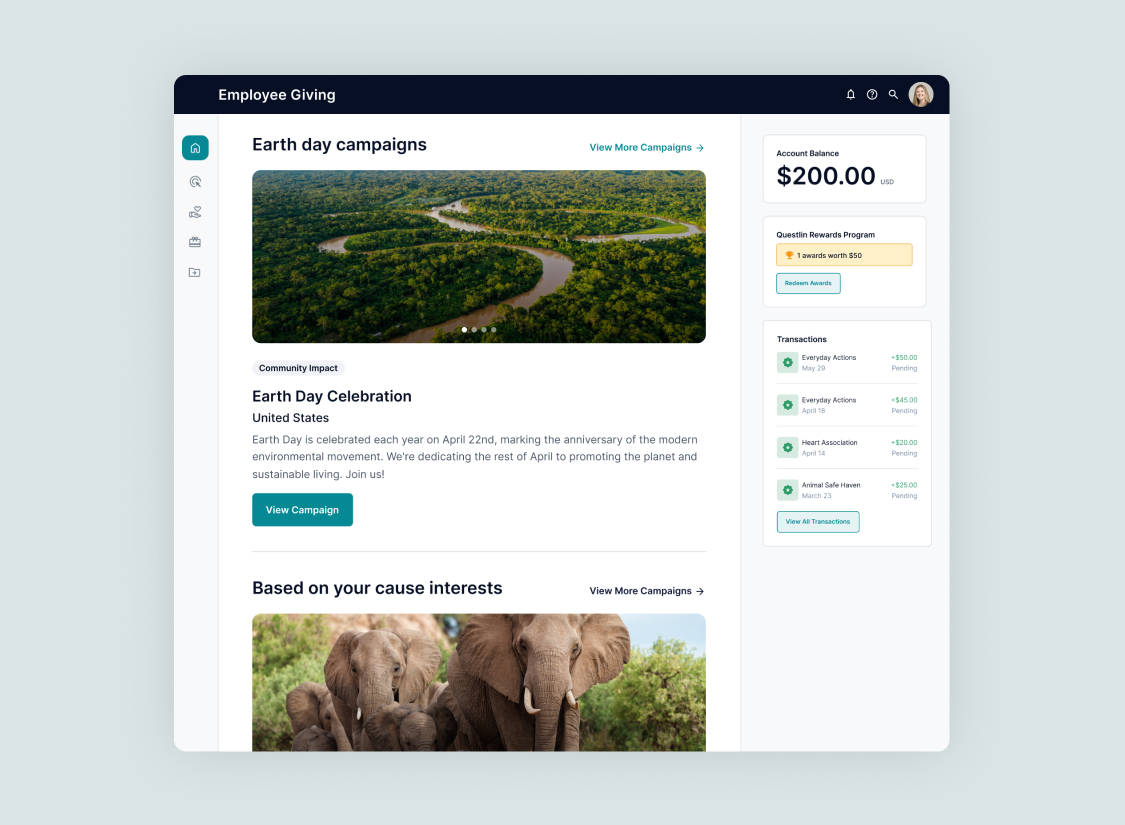
Your CSR software needs to provide each employee a personal dashboard where they can view and sign up for opportunities, log external volunteering hours, and see their contributions over time. The dashboard should also connect to their workplace giving so they have a holistic picture of their activity.
Without a dashboard, volunteering can feel impersonal and employees can feel disconnected from the impact they make. A personal dashboard provides everyone with their own personal impact report so each employee gets a clear picture of how they are contributing to company-wide efforts.
3. ERG alignment
Seek out software that promotes ERG alignment and input. If employee volunteering is disconnected from the employee resource groups, you'll miss a big opportunity to harness the power of employee-led communities. With ERG alignment, you have a natural bridge between your volunteering program and your ERGs, which inspires employees to get more involved in both.
4. Event creation privileges
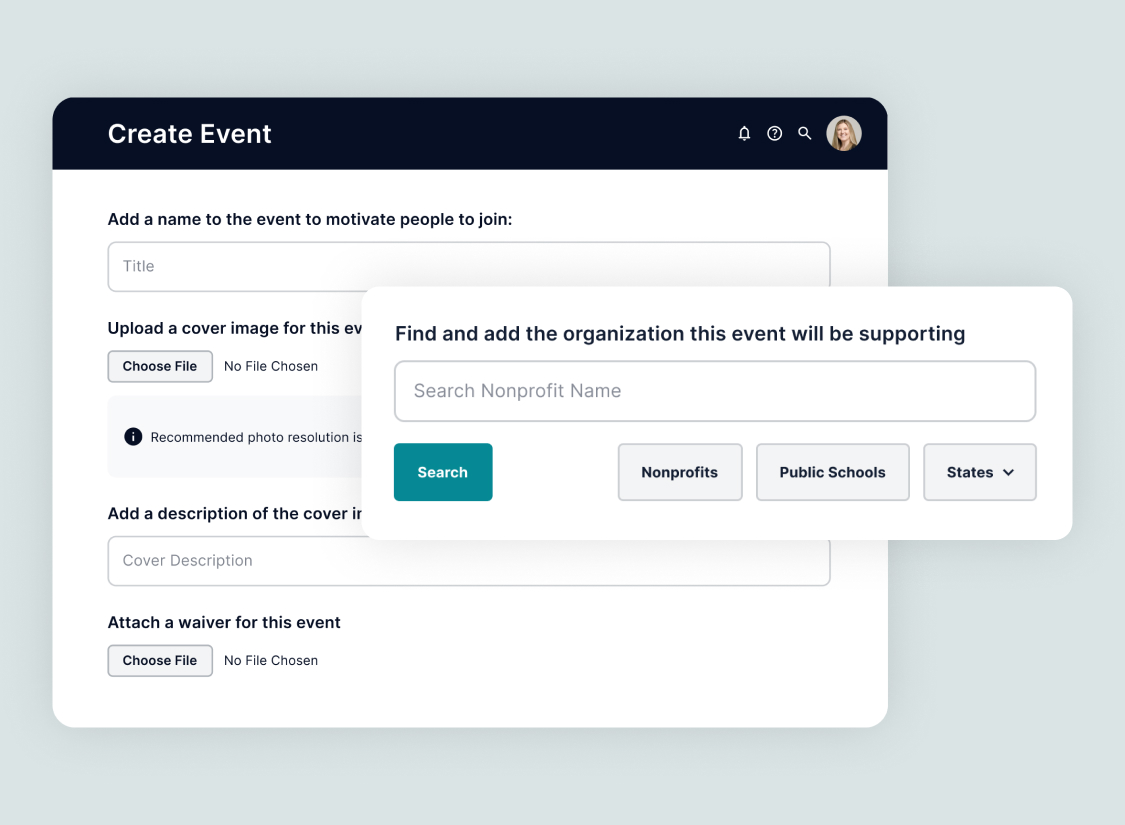
Giving efforts and events are usually covered in red tape, making it nearly impossible for employees to spearhead creation efforts. It's vital that your CSR software includes custom event creation privileges.
Asking your CSR or HR team to create every volunteer opportunity for your company puts a lot of work on them. Plus, it creates a top-down dynamic in which employees feel like company leadership dictates what causes they can give back to.
With event creation privileges you can empower all employees to create volunteer opportunities. This approach allows you to leverage existing relationships employees have with nonprofits and tap into grassroots enthusiasm.
5. Participant visibility
Give your employees participant visibility, so they can see who has signed up for a volunteer event. Often, first-time volunteers have trouble getting started. With participant visibility, you can leverage the social aspect of volunteering to help inspire more people to get involved.
Whether employees pack boxes, form strategy, or work directly with community members, the built-in collaboration of volunteering is a big part of the appeal.
6. In-app surveys
Get feedback from employees using in-app surveys. A really important measure of your volunteer program is whether employees find the volunteer experience meaningful and worthwhile, and how their expectations align with reality. But it can be hard to get employees to take that extra step to provide feedback.
With in-app surveys, you have this feedback loop right within the platform, centralizing the processes for employees and increasing the likelihood they'll take the time to share their thoughts.
7. Automated waitlists
Every company dreams of having events so popular there's a waitlist. But, if that waitlist isn't automated, employees may not bother to sign up for it. If someone ends up dropping out last minute, that spot will be vacant and nobody will be notified of it.
Ideal CSR software will automate the waitlist process. With this automation, employees can opt into a waitlist so they're automatically notified if a slot becomes available. Plus, a waitlist gives you the ability to gauge overall interest in an opportunity. If you consistently see long waitlists for specific events, you'll know it's worth adding more similar opportunities.
8. Dollars for Doers functionality
Dollars for doers, the act of pledging to donate a certain amount for every hour volunteered by employees, is a great way to get people involved in efforts. Manually tracking this kind of initiative can create a headache for your HR or CSR teams, however.
Find CSR software that has built-in Dollars for Doers functionality. This kind of functionality can allow the CSR platform to automatically track employee volunteer hours and match company giving without creating any additional work for your CSR teams. And, it can give you great fodder for internal emails to your employees, motivating them to volunteer even more.
9. Curated Volunteer experiences
Setting up volunteer programs from scratch can take a fair amount of time and effort. You need to find and coordinate with local nonprofits before you even get an event organized.
CSR software that offers pre-planned curated volunteer experiences can be a great way to get the ball rolling. WeHero, a part of Submittable, offers corporate volunteering programs catered to a company's specific needs, including virtual, hybrid, or in-person options.

11 features to look for in corporate giving software
Corporate giving must be easy for employees to opt into without piling the work on the CSR or HR teams leading the effort. The right CSR software makes giving feel personal to each employee and eliminates manual labor for everyone. Plus it has the data and reporting to demonstrate clear impact.
1. Personal impact wallet
A personal impact wallet gives employees one place where they can manage all of their giving. Rather than a disparate set of programs with a series of changing deadlines and instructions, a personal account gives employees consistency and control.
This personal wallet operates like a bank account from which employees can make donations. Employees can add funds via payroll or one-time donations. Plus, the company can add to it as well—to match employee contributions or as an incentive or reward for hitting specific goals or milestones. With a personal impact wallet, employees have the latitude to give when they want and to the nonprofits they choose.
2. Microsoft Teams integration
For employees who don't want to learn a new platform, a Slack or Microsoft Teams integration can be a game changer. A two-way integration can allow employees to donate with one click in Slack or Teams without ever logging into another platform.
One-click giving takes the work out of workplace giving. As soon as someone sees a cause they want to donate to, one click and they're done. No filling out a long form or uploading receipts. As you look at CSR software, be aware that some options have a one-way integration with Slack and Teams, which means employees can get notifications about giving campaigns in their messaging app, but they can't give directly from there.
3. Digital card
The most successful employee giving programs are the ones that empower employees to give when and where they want. With a digital impact card that connects to their impact wallet funds, employees have the freedom to give in person or directly via a nonprofit website.
Submittable's give on-the-go card works like a digital debit card. It draws funds from an employees' impact wallet the same way an HSA card draws down from an HSA account. If a nonprofit has a specific campaign or event, employees don't have to do the legwork to figure out how to use company-awarded funds or matches via the CSR platform. They enter their impact card info the same way they would with a credit card number.
4. Automatic payroll deductions
Employees are more likely to engage with a corporate giving program if your CSR software can automatically deduct their donations from payroll.
Payroll deductions allow them to opt in once, or essentially set it and forget it. Employees pick the nonprofits and choose the amount and duration of their donations. Then they can easily make adjustments whenever they want to increase or scale back their contributions.
5. Company matching
Matching donations can be a nightmare for your finance department, so look for features that streamline company matching.
Your CSR, finance, or HR team shouldn't have to spend time manually reviewing each donation match. Instead, it should be automatic. When companies match (or double) donations, employees have the autonomy to give to the causes they care most about, and in doing so they have a hand in directing company resources. It's empowering and inspiring, and often motivates who haven't given before to get involved.
6. Database of vetted nonprofits
There are many great nonprofits out there. But, there are also bad actors, who are fraudulent or simply do less good with the funding they receive. The onus of finding a nonprofit to donate to shouldn't fall on your employees, as this raises the barrier to giving and could result in them not participating at all.
Be sure that the software you choose provides a large database of vetted nonprofits. With a database built into the software, you can help employees identify trusted nonprofits that align with their values and save your team a whole lot of work.
7. Campaign creation privileges
Corporate giving can feel distant or disconnected for employees, as it's typically less hands-on than something like volunteering. One great way to help employees feel connected in this space is by letting them take the lead on campaigns.
A CSR platform should empower your employees with campaign creation privileges that allow them to create their own giving campaigns. This will help them feel connected to a cause, allow them to team up with colleagues, and invite coworkers to get involved. And, this takes the burden of creating campaigns off your CSR or HR teams, who can use that time to focus on improving your own CSR and DEI efforts.
P.S. Looking for some corporate giving examples to inspire you and your team?
8. Collective impact reporting
Collective impact reporting can paint a complete picture of your company's efforts — donations to each group, company matches, employee efforts over time, and more. Without collective impact reporting, employees may not understand how their individual contributions fit into the larger story.
Seek out software that includes collective impact reporting. Collective impact reporting aggregates all individual giving into one company-level impact report. This reporting gives your team a clear picture of your program's impact and provides the data and narrative you need to communicate that impact to stakeholders both inside and outside of the company.
9. Tools to explore causes
Most employees want to give, but some might not know where to start. CSR software that helps employees easily identify nonprofits aligned with their personal values can help more people get involved.
An AI-powered tool like Discover Causes allows employees to choose causes that matter to them, share a brief description of why those causes matter, and then see a curated list of nonprofits that match their priorities.
Cause funds are charitable funds that support a cohort of nonprofits dedicated to specific causes, such as a disaster relief effort. Employees can donate to the fund and know their funds are going toward high-impact nonprofits. Taking the research out of the giving process provides employees who don't yet have relationships with nonprofits a great starting point.
10. Automatically generated tax documentation
Verify that software automatically generates tax documentation. You don't want anyone on your team stuck manually creating and sending documents. With automatically generated tax documentation, employees get quick and easy access to any tax documents related to charitable donations.
11. Multinational giving and volunteering
Having a multinational organization with offices located around the world can do wonders for your company's culture and overall skill set. But, multinational companies also face a more complicated financial situation when it comes to giving and volunteering. Different tax codes and currencies means more for your finance teams to handle.
Look for a CSR software that supports multinational giving and volunteering, with the ability to streamline or automate finances. This can save your CSR and HR teams countless hours and ensure you're doing things by the book, while allowing you to focus more on what matters most — supporting communities.
Find a CSR solution that keeps up
For CSR professionals, 2025 is a reminder of how essential agility is in this field. Priorities are shifting quickly and CSR software that keeps teams and programs stuck in the past just won't cut it. A great CSR software opens up the possibilities and gives you the confidence to chart a new course forward.
Submittable is flexible, agile, and capable of keeping up with any changes the CSR industry can throw your way. Our platform democratizes giving, creating a positive experience for employees and admins alike. Plus Submittable gives you the tools you need to scale your CSR efforts.
If you're interested in how the right CSR software can help you reach your program goals, get in touch.