
How Taos County’s Lodger Tax Reinvestment Grant Grew by 300% in 3 Years
In Taos County, New Mexico, tourism is one of the largest contributors to the local economy. Visitors flock to the area for its natural beauty, including the dramatic landscape of the Rio Grande Gorge, as well as alpine skiing, art, and living Indigenous history. As is common in popular tourist destinations, visitors who stay overnight pay a lodger’s or occupancy tax. In Taos County, by statute a portion of these funds must be reinvested in marketing and advertising for tourism-related events, facilities, and attractions.
The Town of Taos Marketing and Tourism team receives a portion of the tax directly from tax funds generated within Town limits. However, since Taos County does not have a designated marketing team like the Town of Taos, Taos County faced the challenge of how to equitably distribute the County’s tax funds to the towns, villages, four incorporated communities and two Native Pueblos across the 2,200 square mile region of 35,000 residents.
Taos County’s innovative solution is a grant program to distribute the money directly to local businesses and nonprofits on a reimbursement basis.
Dylan Cox is currently the Lodger’s Tax Coordinator for Taos County, where he administers this program. The program had grown fast by the time Cox inherited it, and the tools running it hadn't kept up.
{{quote}}
Challenge 1: A program defined by statute
The rules of the Lodger’s Tax grant are defined by statute. This includes not only what the funding can support but also how the decisions must be made: via a five-member advisory board with a fixed composition of two lodging owner-operators, two tourism-facing business owners, and one resident-at-large. This committee must score every application, with county commissioners having final say.
The strict funding restrictions and multi-process review structure mean that Taos County could not improvise or simplify the process as the program grows, instead having to adapt its workflows to fit within the limitations of its free tool.
Challenge 2: Outgrowing their application tool
The County had been using Jotform to collect applications for two years prior to switching to Submittable. JotForm could take in an application — but provided no additional administrative capabilities such as coordinating advisory board grant reviews or processing reimbursement requests.. Moving a submission through eligibility review, advisory board scoring, and county manager approval meant chasing it over email, with no shared place for reviewers to see where anything stood.
By 2025, Taos County was receiving dozens of applications across two cycles per year, and dealing with collective funding requests that edged towards one million dollars. The program had grown well past what a simple form-building tool and one staff member could keep organized.
Challenge 3: Even clunkier reimbursements
Reimbursements were worse: up until the transition to Submittable, every request was handled through email, with invoices and proof of payment attached to the thread. "We had been processing all of the reimbursement requests through email, which was very inefficient," Cox says.
With dozens of grantees submitting reimbursements across a fiscal year, there was no way to see, at a glance, what had been paid, what hadn't, and what was sitting untouched in someone's inbox. It was "very clunky" Cox confesses.
It was time to graduate to a dedicated grant management software, a move that was set in motion before Cox took the role.
A system set to scale
Dylan’s predecessor selected Submittable. As a former grant writer, Cox was already familiar with the platform after applying for funding through United Way of North Central New Mexico and other entities. This would be his first time in the driver’s seat from the administrative side.
Here’s what worked for him and the County.
One portal for review and reimbursement
Submittable enables Taos County to run eligibility checks, advisory board scoring, and county manager approval inside a single workflow instead of routing it by hand. The Advisory Board scores every application against a rubric past and current members helped build, and reviewers who need help can lean on a step-by-step guide Cox shares at every onboarding meeting. "That's probably been one of the most effective parts about Submittable — accommodating our multi-stage review process," Cox says.
What used to live in scattered email threads now exists as individual, trackable submissions — each with its own record. Reporting that once required digging through old contact lists to send an email blast now runs through Advanced Reports.
A flourishing tourism industry
After years of reinvesting lodgers tax dollars in local marketing and advertising, the area's businesses have definitely seen the intended results.
One example is Red River’s Oktoberfest, put on by the Red River Chamber of Commerce. They’ve been repeat awardees for several years, and have used funds for signs, posters, radio ads, photography and videography, and social media to draw participants to the event. It’s been successful, attracting 14,000 people in 2025, with a year-over-year growth of 15.7%.
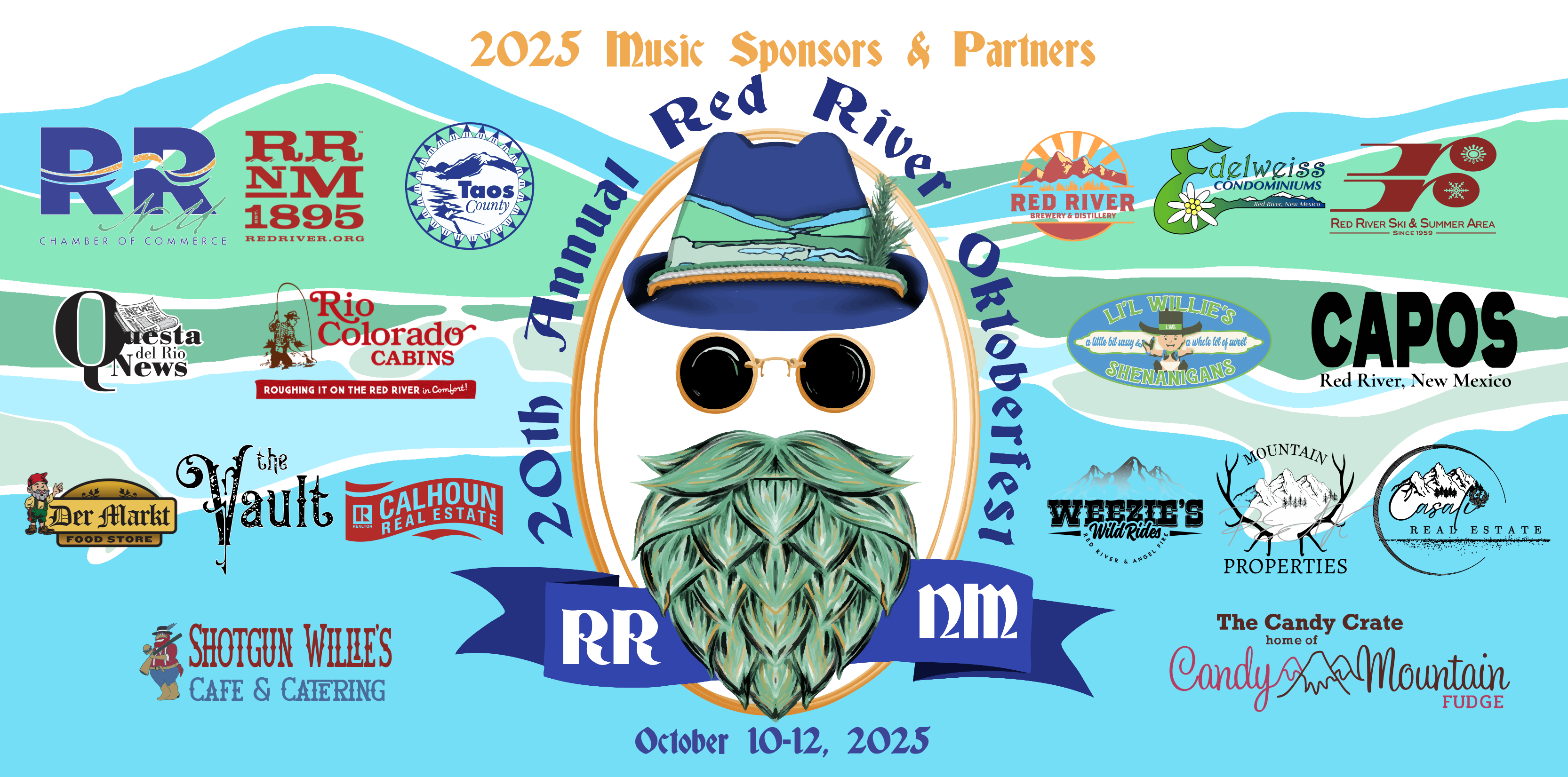
Cox recalls that after speaking with the director, “They're growing at such a rapid pace that they're experiencing and dealing with capacity concerns. And I think because of the amount of funding that we've given them year over year to help support them in their marketing, it's enabled them to just see this exponential growth to their event.”
High visibility and strong program advocates
Over the past three fiscal years, Taos County has reinvested just over $1.1 million into local entities through the program — roughly matching what it reinvested in the twelve years before that, representing a 300% acceleration. In the most recent spring cycle alone, the county fielded 49 applicants requesting close to $1 million against a roughly $1 million annual budget, awarding $650,000 by its scoring formula.
Taos County continues to operate a two-department review for every reimbursement — program staff, then finance — and hasn't had an issue with an audit or an inaccurate payment.
The clearest sign that the program is continuing to earn community trust came from outside the county office. Cox recalls a community Facebook post that accused the County of "stealing everybody's [tax] money." He then watched as past grantees voluntarily responded in the comments themselves, explaining the program's impact on their own businesses. "That demonstrated to me the unspoken appreciation of this grant program," he says.
Setting up the County for a solid future
Anticipating more growth, Cox’s focus has shifted to ensuring all applicants are familiar with the granting criteria, which he clarifies in the guidelines available on their Submittable portal.
And if tourism continues to grow, he knows that the program infrastructure can now handle it.
Best of all, the County can show, dollar for dollar, how lodgers' tax funding reaches the businesses tourism depends on. "As a local government official, we're always under scrutiny from the public," Cox says. "So as long as I can continue being as transparent as possible, I think people will continue applying for this program."
Read more stories from government grant programs like Taos County's.