The 7-step guide to participatory grantmaking
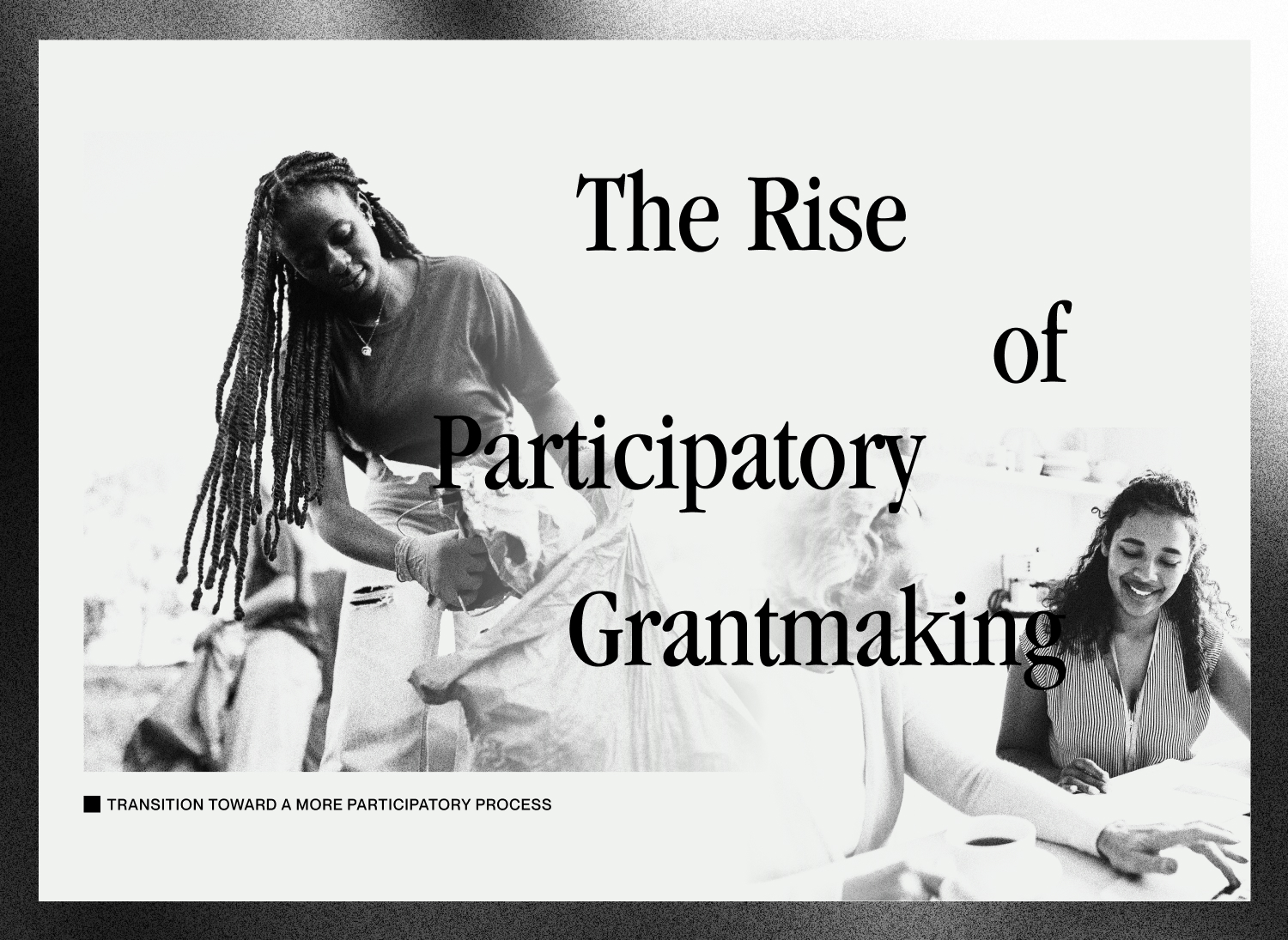
Traditional philanthropy has a problem. The top-down, hierarchical power structure often undercuts efforts to make lasting change. In fact, the system itself can mirror the very conditions that created inequity and drove the need for charitable giving in the first place.
One of the biggest critiques is the divide between funders and grantees. So often there is a gap between the people being served and the ones calling the shots about how funds are distributed. Leaders in the sector have long been voicing their concerns about this imbalance—and while arguably overdue, many funders are now actively taking steps to shift their practices.
One promising way forward is through participatory grantmaking. Participatory grantmaking reimagines the relationships and decision-making processes that shape programs and organizations.
What is participatory grantmaking?
Participatory grantmaking is an approach to grant management that centers the community being served. Community members help design and drive programs. They are included in setting goals, making decisions about how to allocate resources, and evaluating success.
Participatory grantmaking breaks down the binaries that have become entrenched in traditional philanthropy. It closes the distance between funder and grantee. And it upends the notion that program recipients should be separate and distinct from decision makers.
This model of giving relies on the expertise of those with lived experience. Who knows a community’s challenges and strengths better than someone from within it?
How does participatory grantmaking work in practice?
To get the right participatory framework in place, you’ll need to make sure it fits well for your organization and community. It likely won’t work well to simply copy exactly what another funder is doing. But it’s worth looking to others for some inspiration.
Lever for Change
Lever for Change (LfC) is dedicated to supporting bold ideas with big dollar awards. As they built out their strategy, they wanted to create a grant process that was valuable for every applicant, even those who didn’t receive funding. So they built a participatory component into their grant review. Now applicants review each other. This gives them the chance to see what other organizations are doing and what their proposals look like. Plus, the LfC team gets invaluable insights.
Pablo Montaya, general director of Sinergias, a recent awardee, explains how the process itself benefited their organization. “The application experience was very interesting and positive,” he says. “It was also important because it generated reflections and internal discussions.”
Mama Cash
Mama Cash is a feminist grantmaker who is deeply dedicated to a participatory approach. The team has distributed over $70 million to more than 6,000 organizations worldwide.
At Mama Cash, all grantmaking decisions are made by feminist activists, rather than staff. Community members set organizational priorities and choose the grantees Mama Cash should fund. The team also uses insights from the process to help influence other funders across the sector.
Trans Justice Funding Project
The Trans Justice Funding Project funds Trans-led grassroots organizations who exist to serve and improve the lives of their local and national trans, gender non-conforming and non-binary communities.
Every year, the team selects a new panel of six Community Grantmaking Fellows. These fellows are trans and non-binary leaders themselves from around the country, hand-selected into an intergenerational, multiracial cohort. Throughout the grant lifecycle, the fellows review and score hundreds of grant applications, gather for intensive discussion, and ultimately decide who should receive a grant and the grant award size.
Benefits of shifting to a participatory approach
Making an effort to include a participatory component to your grantmaking can help you create more effective, resilient, and trusted programs.
Addressing inequity
Traditional philanthropy has for centuries perpetuated inequity by favoring certain voices and further concentrating power. Shifting to participatory grantmaking is a means for your organization to address these imbalances. For example, charity and foundation boards are overwhelmingly white. This has contributed to skewing who gets funding and how much they get.
Moving to a participatory framework breaks this cycle of racial injustice by shifting the power to the communities. It’s an incredible vehicle to democratize philanthropy and tackle the inequities that have long been plaguing the sector.
Ensuring efficacy and longevity
Centering the community in your program design means understanding the values and needs of the people you’re looking to serve. This connection gives you a much higher chance of building a meaningful and lasting program.
When people feel engaged and listened to they are much more likely to participate. Community involvement and investment are keys to long-term success in grantmaking. If folks feel like your program is steamrolling community voices and imposing an outside set of values, it’ll be difficult for your organization to build trust.
Community members know best what works and what doesn’t. They have a deep understanding of how issues and solutions intersect, and likely they have witnessed past attempts to make change. Using a participatory model means that their expertise will shape your program. Not only will this help you sharpen your tactics, but it ensures that you’ll get honest feedback about the impact of your work.
Matching resources to needs
As a grantmaker, you’re delivering funds to the individuals and organizations that make change. By involving community members in designing your program, you can direct resources to the projects that address the most pressing needs. Getting feedback from those who know best prevents you from investing in the wrong approach.
For example, say you’re looking to improve educational outcomes for students in a certain neighborhood. Based on your experiences, perhaps you think a tutoring program would be a good approach. Without community input you might move forward with this idea—but what if there are more urgent needs that would have an even greater impact on student outcomes? What if food insecurity is a big issue? Or maybe kids do not have access to mental healthcare or trauma support. A tutoring program isn’t going to help much if these needs aren’t met first.
7 steps to adopt participatory practices
For funders looking to build their participatory muscle, here are seven steps to help you get started.
1. Make a commitment
Shifting your practices requires buy-in from all levels of your organization. Get your leadership behind the effort and give everyone on the team a chance to voice their questions and concerns.
Clarify your vision. What does a participatory approach look like for your organization? What changes are you hoping to make? Push beyond vague notions to set tangible goals to help you stay accountable. Be sure to plot out how a participatory approach aligns with your mission. This will help guide your work.
Understand that the process is part of the impact. In participatory grantmaking, money is only a piece of the story. Empowering the community and enabling their self-determination is as meaningful as the resources they receive.
2. Connect with community members
Relationships are essential. If you don’t already have strong ties in the community, work to build those connections. Hold space for dialogue and lay out your plans for including new voices in your decision-making processes. Of course you want to be open to feedback, but feedback alone is not enough if final decisions remain in the same hands.
Approach these conversations with humility and be sure to listen more than you talk. You want community members to feel heard. This will help inspire them to show up and get invested in the work.
Be open and honest with the community about how your organization operates. Again, it’s not just about where the money goes, but about who holds the power. The public should be able to understand how decisions are made and who is making them.
3. Take a new approach to risk
Perhaps in the past you required nonprofits to have a proven history of success before you would offer support. Maybe you even prioritized people you worked with in the past or organizations that had secured certain credentials. Of course the impulse was likely to minimize risk, but that often leaves out emergent organizations. In turn, you might be ignoring a whole subset of the community that larger nonprofits aren’t able to reach.
Shift your understanding of risk so that you can support those local grassroots efforts even if they don’t have a history with your organization or slick promotional materials. Perhaps you need to eliminate certain requirements or restructure your grant application process. It’s also worth examining how unconscious bias can influence decisions around funding.
4. Redefine expert and changemaker
Breaking down the binary between community members and decision makers also means redefining who can make change. An expert is no longer a scholar or someone who’s had a long tenure in philanthropy. Instead it’s defined as someone with lived experience.
Change is not just an outside force, but comes from within the community. Redefining these terms will help your team center the right voices in their work. For example, Global Greengrants Fund follows the lead of community members and provides resources that folks on the ground may use however they see fit.
One aspect of shifting power is reshaping timelines to fit community needs. That might require some adjustments on your side. But it’s worth it. Because rushing to meet artificial deadlines will hamstring your ability to build relationships. On the flip side, moving too slowly to address an urgent need can undermine your program.
5. Create the right balance for your organization
The shift to participatory grantmaking doesn’t have to be all or nothing. Maybe you want to move to a purely peer-led model. Or perhaps you want staff and donors to be involved in some aspects of the work. Find the right balance for your team and mission.
You can also start small by implementing changes to one or two of your programs without overhauling all of the work you do. This gives you the opportunity to try out new ideas on a small scale before you integrate them more broadly.
6. Build participatory practices into your internal structure
It’s difficult to switch to a more communal approach with grantees if your internal organization structure is still built on a top-down hierarchy. Think about how you can incorporate these new practices into your internal work. You might encourage staff members to collaborate across programs. Or you could work to involve staff from all ranks to weigh in on policy discussions rather than leaving it only to folks in leadership roles.
Starting with your team allows you to get practice involving the community, listening openly, and collaborating effectively. Plus it prevents the whiplash and resentment of moving back and forth between two opposing frameworks.
7. Find the right solutions to support your work
Technology can be the lynchpin in facilitating collaboration and streamlining communication between your organization and the community you serve. A grant management software that’s built to support a new era of philanthropy will make the shift to participatory grantmaking easier to navigate.
Look for an easy-to-use platform that allows folks to be a part of the review process without being in the same room. This lowers the burden on community members and allows you to include more perspectives. Plus it gives all voices equal weight, rather than favoring the loudest person in the room.
Evolve with confidence
Shifting to a participatory model means rethinking the structure and workflow of your organization. As you adopt new practices, you want to leverage tools that will make the transition as easy as possible.
Submittable was built to facilitate these evolutions. We make it easy to launch and manage your grantmaking programs. With tools to support equity, build relationships, and collaborate easily, it’s the ideal solution to support your work. See how it works.
Laura Steele is a content producer at Submittable focused on the world of grantmaking and corporate giving. Her work often explores the connection between technology, equity, and social good.
Learn about the trust-based movement
Watch our webinar with Shaady Salehi of the Trust-Based Philanthropy Project.
Explore the broader efforts to decolonize philanthropy
Check out our Impact Audio podcast episode featuring author and activist, Edgar Villanueva.
Find the right solution for your work
Get a look at how Submittable can help streamline your process and empower you to make change.
A corner of the internet for grantmakers
Sub*stance is a publication by the team at Submittable. It’s a destination for the people doing the real work in the grantmaking world. Our aim is to craft pieces that dig beyond the surface level, where the real substance sits.
Explore Sub*stance