12 grant management best practices from Lever for Change, United Way, and more
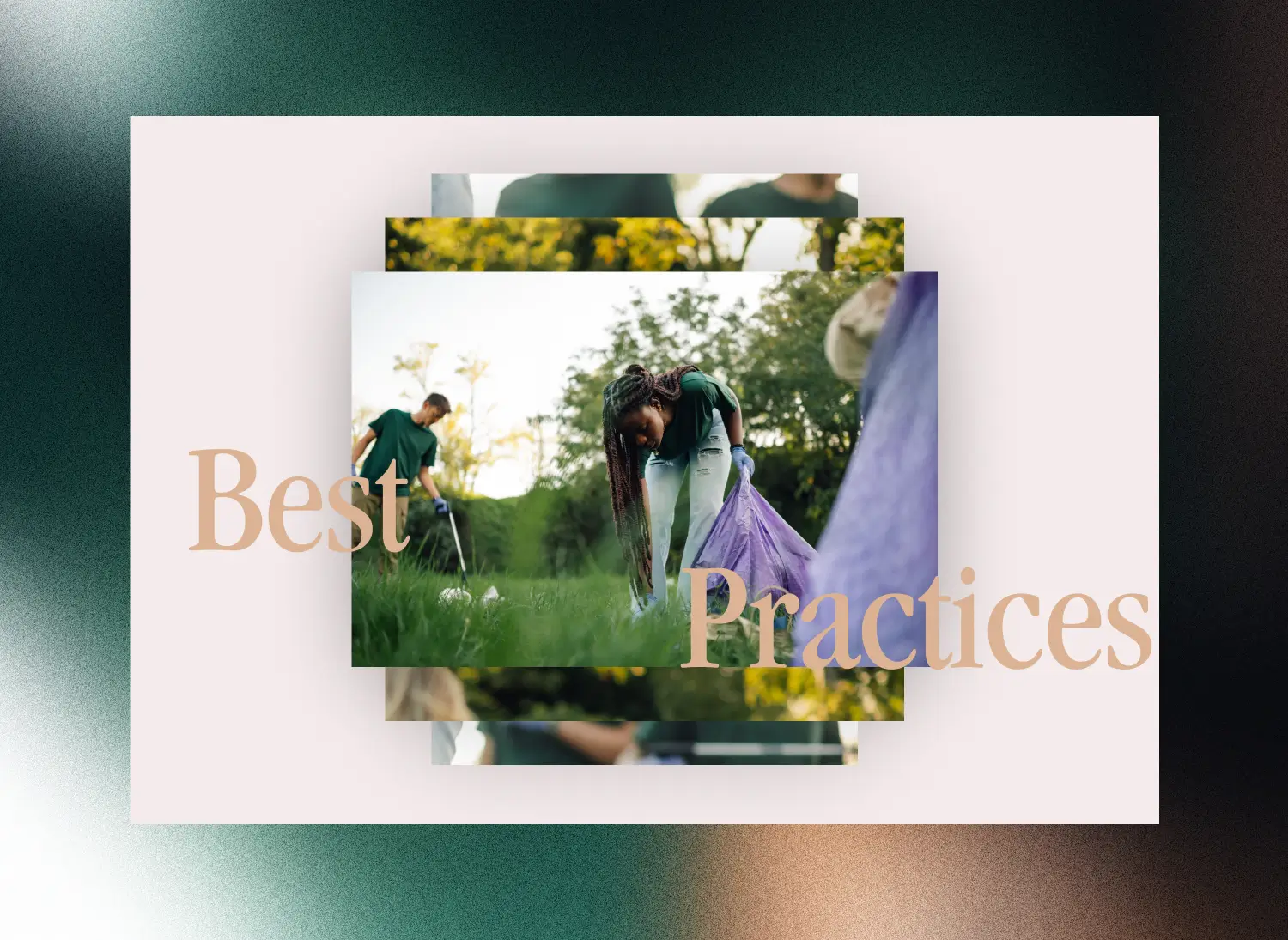
Grant management best practices in 2026 focus on the way funders can incorporate their values into every phase of the grant lifecycle.
Because for funders, the grantmaking process itself plays a role in how they support or erode equity, challenge or uphold existing power structures, and empower or undermine nonprofits.
It’s worth looking to leading organizations such as Lever for Change and United Way of the Greater Triangle for inspiration. They’re intentional about designing their grant management process so it can bear the weight of what it needs to hold.
Make the grantee relationship a goal in itself
For funders, a strong relationship with grantees isn’t a byproduct of their grantmaking; it’s the point. This collaboration is how funders and nonprofits make a meaningful impact, stay resilient, and plan effectively for the future.
Craft structures and practices to strengthen the relationships you form.
1. Minimize the applicant burden
Show that you respect applicants’ time by minimizing the burden you put on them. Make the application straightforward and easy to complete. Only ask for the info you actually need to make a decision. The less you pull nonprofit staff away from their other essential work, the better.
The North Star Fund gives applicants flexibility in how they answer questions to try to cut down on the amount of time and effort they need to devote to the process. “As an example, for the budget we offer multiple options. You can either upload a budget spreadsheet or answer questions in a long form depending on what's more efficient for the group,” says program associate Leyana Dessauer.
2. Set up a strong communication system
You shouldn’t feel like you’re fighting against your communication tools to build a meaningful, responsive relationship with grantees. No one-off messages, threads lost in inboxes, or back-and-forth without context.
Your grant management software should have communication tools built in so that you can communicate at an organizational level, and nothing is lost if roles change. Messages should live side-by-side with application materials so your team always has the full context.
3. Focus on the applicant experience
Be intentional about building the application flow from the applicant perspective, not just the admin’s. Questions must be straightforward with simple processes to upload documents, collaborate across teams, and track progress. Try to anticipate any roadblocks, and make sure everyone can access support they need.
The application is often the first touchpoint of the relationship between a funder and grantee, and it must be treated with care.
Jeff Howell, CEO of the United Way of the Greater Triangle chose grant management software specifically with applicant experience in mind. “I think from our perspective, the investment in something like Submittable is us investing in that first experience with United Way of the Greater Triangle and what that relationship can grow into,” he says.
Hot tip: Treat every applicant with a relationship lens, not just selected grantees.
Be transparent with applicants at every stage
Be clear with applicants about what you’re trying to achieve through your program and what you expect from partners, including timelines, budgets, and reporting requirements. Transparency makes sure the partners you find are truly aligned and minimizes surprises for them along the way. Plus, that openness sets the tone for how you will show up in the community, and may make organizations more comfortable to partner with you.
4. Create clear guidelines for applicants and reviewers
Be straightforward early about what you need from applicants, in what format. Extend that same clarity into the review process, whether you have a team of internal or external reviewers.
An eligibility quiz is a great way to clearly communicate guidelines for applicants, so you only review potential grantees that match your minimum requirements, whatever they are. The quiz is usually a few short questions based around your program eligibility requirements, whether that’s geographic region, cause area, nonprofit status, or something else. Lever for Change’s Organizational Readiness Tool is a good example. It’s a good quick way to make sure everyone is aligned.
5. Hit deadlines and timelines
Part of being transparent is laying out timelines and deadlines—and then sticking to them. Grantees need to know they can rely on you to make decisions and deliver funding when you say you will. If you need to move a deadline, be forthcoming about the reasons, and own up to any mistakes. Be sure to allow grantees the same flexibility you give your own organization.
Lever for Change is very intentional about building their grant management process to be transparent. Though they are known for trying bold new approaches, they always prioritize sticking to their public timelines.
{{quote}}
“One of our values is to be transparent about a timeline. So we're not going to pause a challenge for six months and go back and sort of redesign. We wanted to stick to the timeline that we agreed upon so people can expect when they're going to hear back from us or when the money would be dispersed,” says Jenna Schornack, vice president of awards and social impact.
6. Clarify budgets and post-award expectations
Be as forthcoming as you can about what you expect from grantees in terms of budgeting and post-award reporting. It’s best if no one is surprised along the way, so there’s no panic to collect data or create reports when the deadline hits.
A real-time budget tracking dashboard can be useful to help keep your organization and your grantees on the same page. Let your partners know what you expect: receipts, progress reports, or other documentation. Automating reminders can go a long way in making sure you have what you need without hassling nonprofit staff as deadlines approach.
Hot tip: Create processes you’d be proud to be public.
Prioritize learning
Doing grant management well means making room for innovation and staying flexible. Because even if your process works well today, whatever comes tomorrow might require something totally different.
7. Aim to experiment
Making the effort to experiment with new approaches can help your team uncover fresh ways to solve problems. Sometimes it’s worth experimenting on a small scale and then expanding the experiment as you prove its effectiveness.
In the ultimate grantmaking experiment, Lever for Change introduced the open call to try to drive big dollar awards to bold solutions. The model proved so successful, it’s become the core of their approach to funding.
8. Change processes as you go
Experimentation doesn’t mean much if you don’t adjust your processes based on your findings. Make adjustments where you need to based on experiments you run, feedback from applicants or reviewers, or patterns you see develop.
Make sure you choose software that gives you the flexibility you need to make changes as you go. You never want to feel like your technology hems you in and prevents you from making a change that would benefit everyone.
9. Support learning for nonprofits, too
In the same way you empower your team to try new angles, set up your grant programs to give latitude to nonprofits to do the same. Aim to give them the support and structures they need to develop and test new ideas.
As part of their award process, Lever for Change offers planning grants to finalists for many of their open call challenges. The planning grants give nonprofits the funding and resources they need to create a comprehensive plan for their bold ideas. This level of support ensures that good ideas aren’t dismissed simply because they haven’t been tried before.
Communities United is a racial justice organization in Chicago and Lever for Change partner that received a planning grant. “When we got the $1 million planning grant, it was pivotal,” says Jennifer Arwade, co-executive director.
Hot tip: Aim for iteration over perfection
Challenge the traditional model
Be willing to think outside a traditional model of philanthropy. Consider what your goals are and which parts of the process might need to be adjusted. Even if you stick with a traditional model of giving, it’s worth interrogating that choice so you know as you move forward that you’ve made the right decision for your organization.
10. Build processes to match your values
Map your grant management processes to your program’s core values. Looking to support equity? Make sure the application is accessible. Trying to build deeper connections in the community? The process should bring nonprofits together, not pit them against each other.
When the Headwaters Foundation needed to choose a cause area, they actually went out into the community for a series of town halls. Their goal was to learn what community members saw as the biggest need.
“We talked to everyone from high schoolers to hospital CEOs and everybody in between,” says Brenda Solorzano, former CEO of the Headwaters Foundation. Their feedback made it clear that the foundation should support early childhood development.
11. Mind the power dynamic
Because grantees are vying for support, the funder-grantee relationships naturally contain a power imbalance. Grantmakers should consider that inherent imbalance, and adjust processes to adjust for it. Allow for flexibility in how applicants submit info, seek feedback from the community by including them in the review or decision process in some way, and give grantees the latitude to define success in their own terms.
Native Women Lead, a Lever for Change partner, is dedicated to revolutionizing systems and inspiring innovation by investing in Native Women in business. As co-founder Jamie Gloshay and her team built the proposal, they created a water cycle logic model to reflect the community’s values. In choosing what outputs to track, they focused on what made sense for the community members.
“We looked at concepts around agency healing, safety, sovereignty, remake, creation, economic empowerment, economic advancement,” she says. Lever for Change didn’t dictate those outputs, it gave the organization space to choose.
12. Create a new model that other grantmakers can use
Most leading grantmakers are not thinking about their work in a vacuum. They’re considering how the choices they make influence other funders and the sector at large.
As you try out new ideas and approaches, consider ways you can build models that other funders can adopt. And on the flip side, look to other funders for inspiration.
One of Lever for Change’s explicit goals is to create a blueprint for other funders. And they’re delivering. Since their first open-call challenge, they’ve launched 15 additional challenges, including one on behalf of Mackenzie Scott’s Yield Giving. They’ve distributed $2.6 billion and are on track to hit $10 billion by 2030. Plus, they’re inspiring funders of all stripes to try out a new model of grantmaking.
Hot tip: Ask nonprofits for their ideas; they know the downsides to the traditional model more than anyone.
Find a software that has grant management best practices built in
You never want to feel like you’re working against your technology to do the best version of your work. Look for grant management software that can truly support your vision, and a team who deeply understands your work. You need an experienced partner who grasps how much processes matter in grantmaking and what it takes to get them right.
Ready for a GMS that allows you to be flexible and innovative without ever sacrificing on reliability or the user experience? Curious what it’s like to use technology where best practices are baked in? Check out our on-demand demo that walks you through what your programs could look like with Submittable.
Laura Steele is a content producer at Submittable focused on the world of grantmaking and corporate giving. Her work often explores the connection between technology, equity, and social good.
A corner of the internet for grantmakers
Sub*stance is a publication by the team at Submittable. It’s a destination for the people doing the real work in the grantmaking world. Our aim is to craft pieces that dig beyond the surface level, where the real substance sits.
Explore Sub*stance