What full grant lifecycle management really means
“Full-lifecycle grant management” is one of those terms that gets thrown around easily. But not everyone takes the time to define what it really means in context.
Practicing full-lifecycle grant management is not just about managing every phase of the grant lifecycle. It’s about strategically connecting all the phases.
If you’re a grant manager stretched thin because you’re the one holding everything together yourself, you may be covering all the phases, but you’re likely not practicing true full grant lifecycle management. Because a full lifecycle approach should be less work, not more.
What is full-lifecycle grant management (vs. a piecemeal approach)?
Full grant lifecycle management means that the three phases of the grant cycle—pre-award, award, and post-award—are built as one structure.
Think of it this way: in a piecemeal approach, grantmakers build the three phases as if each one is a standalone building. But a full-lifecycle approach means that the whole grant lifecycle is constructed as one building with multiple floors. Electrical, plumbing, and HVAC interconnect across all three levels.
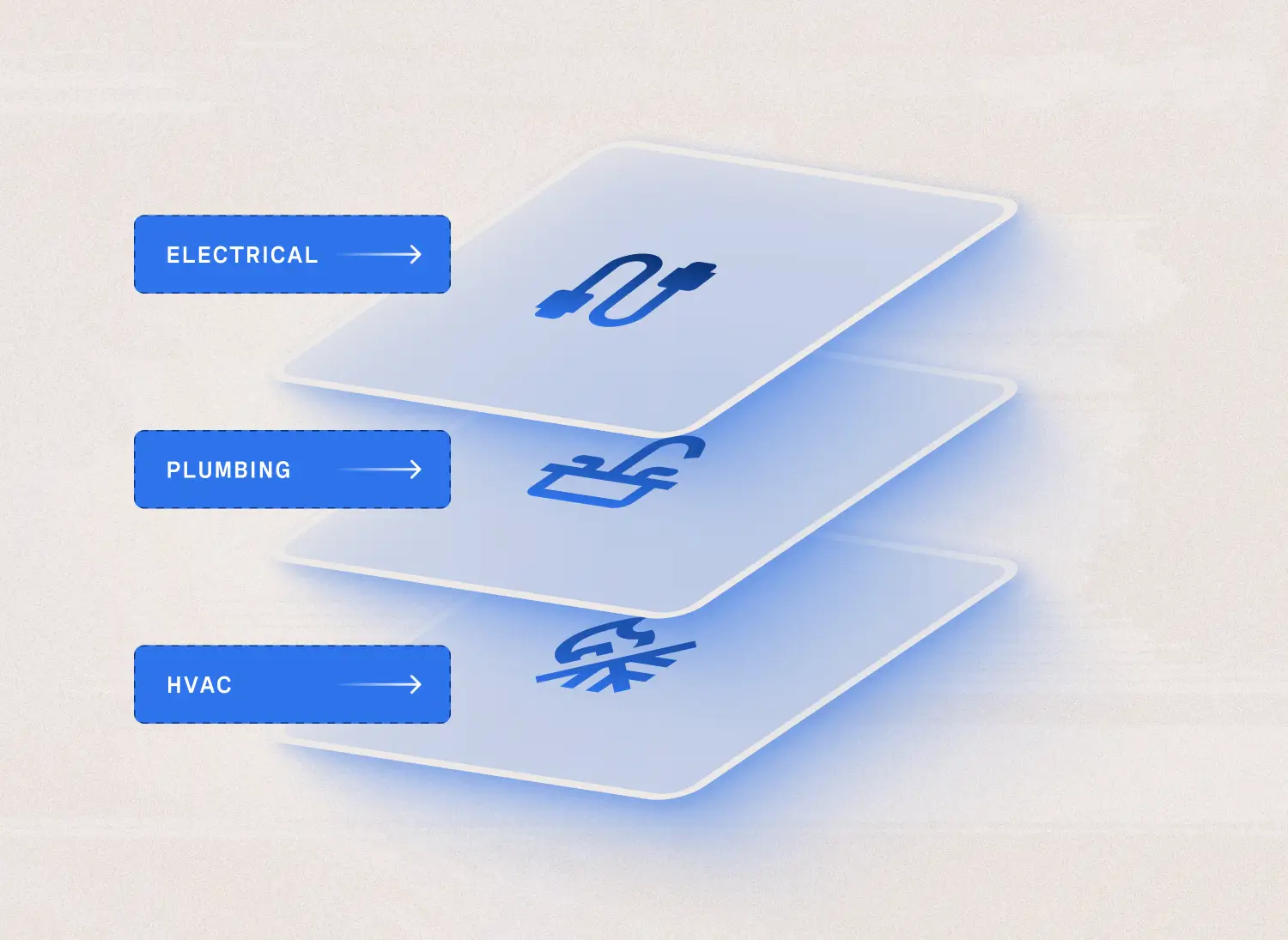
For instance, in a full lifecycle approach, the application design links directly to reporting requirements. Grant managers know that as soon as applications are submitted, they have the data they need from applicants, in the right format, to build all their reports. They’re never chasing down information in the post-award phase.
To craft a true full lifecycle approach, grantmakers need to build intentionally from the beginning. That means having the vision to understand how the phases should connect, and also using grant management software that’s designed to support the full lifecycle.
Full-lifecycle grant management in action
In the same way you can’t often see all the benefits of well constructed plumbing and electrical systems when you enter a house, you probably can’t see all the benefits of full-lifecycle grant management until you’re fully in it.
To understand what’s possible, look to organizations that have built a full-lifecycle approach into their work.
When Lever for Change launched, the team set out to create a completely new grantmaking process. Rather than tackling each phase on its own, they thought holistically about how the traditional grantmaking worked, and how they could transform it to be better for everyone involved. With a novel participatory grant review process, support for planning and innovation, and a focus on relationships, Lever for Change has had a profound impact on the whole philanthropic sector. So far they’ve distributed more than $2.6 billion to community organizations.
The United Way of the Greater Triangle is thoughtful about the way the initial application phase shapes their relationships with grantees. Jeff, Howell, CEO, sees the application as an opportunity to get the relationship started off on the right foot. “I think from our perspective, the investment in something like Submittable is us investing in that first experience with United Way of the Greater Triangle,” he says. The approach has paid off. The organization has become deeply connected and trusted in the community. And Jeff, who started as a program leader, stepped into the CEO role last year.
Why is full-lifecycle better?
Though taking a full-lifecycle approach requires some work on the front end, it’s better for everyone involved in the grant process—grantmakers and grantees alike. Full-lifecycle management puts you on more solid ground and provides better opportunities to connect efforts and think more holistically.
When grantmaking work is strategically connected as an ecosystem, not a list of tasks, grant managers have the bandwidth and clarity to tackle deeper questions such as:
- How do you truly support innovation?
- Where do trust-based practices fit?
- What aspects of your work should be automated?
- How do you measure the impact of unrestricted funding?
- What does collective action look like?
Features to expect from a full-lifecycle GMS
A lot of grant management software claims to be “full lifecycle.” The key to choosing the right one is finding the features that actually map to a full-lifecycle approach.
Application & review
The application and review process should tie directly to the impact your organization is trying to make. If you’re aiming to build relationships or add capacity for grantees, your application process should feel like the first step in a relationship—and one that doesn’t create an administrative burden for applicants.
Full-lifecycle
Each component of the application clearly connects to what reviewers will consider and what program managers will report on, with built-in safeguards for privacy. Look for:
- An easy-to-build application.
- Global fields you can use across programs and forms.
- Full application history available at every stage.
- Admin permission levels to protect sensitive information.
Fragmented
The application is built without being tied to the full reviewer experience or reporting requirements. This looks like:
- The application asks for information reviewers won’t consider.
- Data at the application phase isn’t formatted for reporting.
- Personal and private information is visible to all reviewers.
- Application history is not available or difficult to view.
Communication
Communication is not a one-off message here and there. It’s an ongoing relationship and a two-way street.
Full-lifecycle
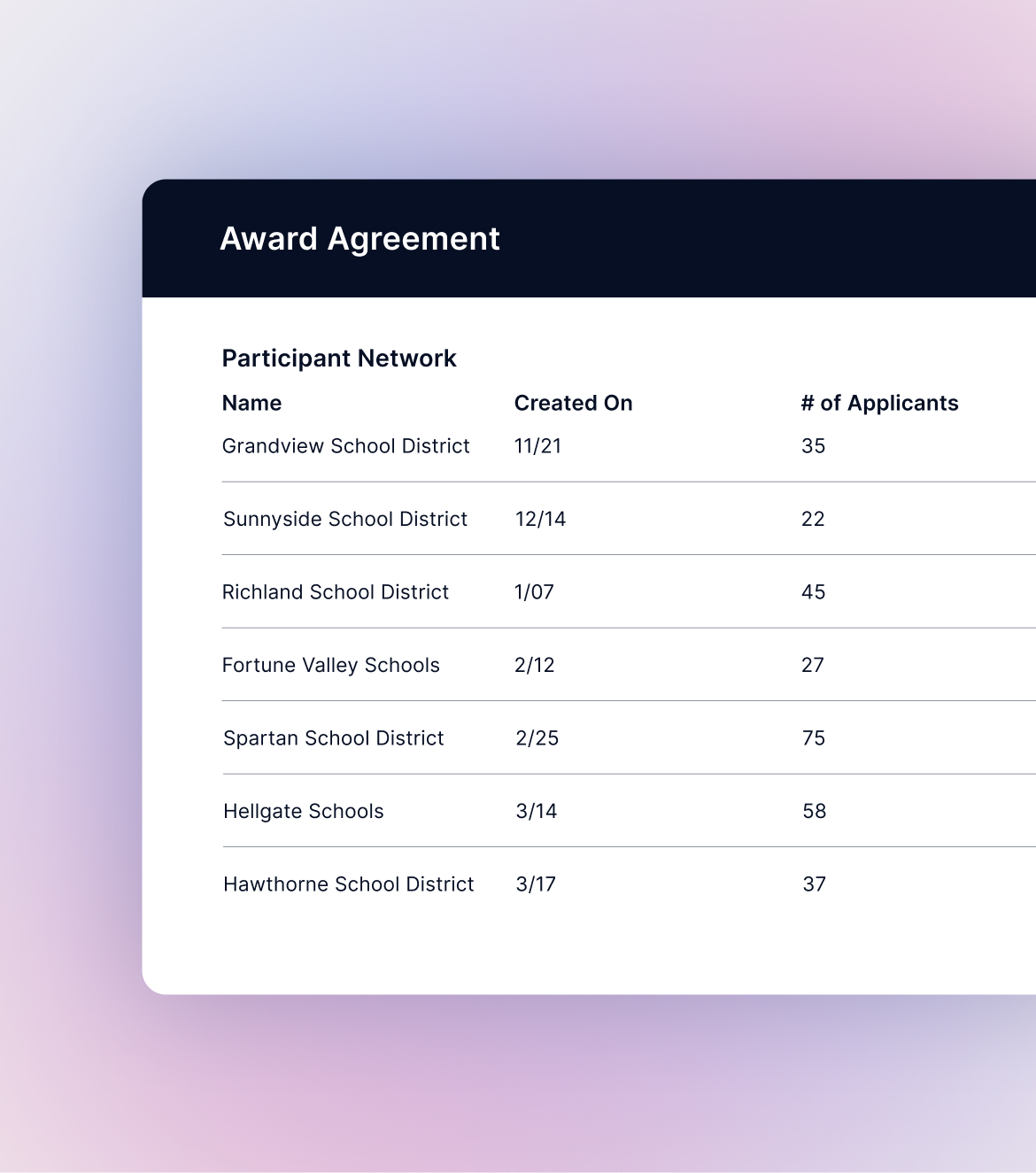
Communication is easy to access in one place for everyone, providing clarity and consistency, even through team transitions. Look for:
- Communication history that lives side-by-side with the application.
- Automated reminders for progress and expense reports.
- Easy e-signatures.
- A program inbox.
Fragmented
Communication doesn’t flow across the grant lifecycle phases. Messages get stuck at the individual level. This looks like:
- Back-and-forth via email without context.
- Reminders cannot be automated or scheduled ahead.
- Communication history isn’t viewable across programs or phases.
- Grant managers chasing down progress and expense reports.
Financial oversight
Throughout the grant lifecycle, everyone should have the financial insight they need, when they need it.
Full-lifecycle
It’s easy for admins and grantees to track their budget and understand requirements at every phase. Look for:
- Budget tracking across programs.
- Built-in fraud prevention.
- Real-time updates with a single source of truth for admins and grantees.
- The ability to define allowable spending, categories, and maximum indirect costs.
- Funds that can be automatically released on schedule or when requirements are met.

Fragmented
The financial mechanisms of the grant process don’t connect clearly through each phase. This looks like:
- Difficulty tracking budgets across programs.
- Applicants are surprised by budget limits and timelines.
- Grant managers are manually tracking requirements and initiating payments.
Reporting & monitoring
Though reporting happens in the post-award phase, the structure for it must be built early.
Full-lifecycle
When a grant management software helps you anticipate all your reporting and monitoring requirements, there are no surprises along the way for admins or grantees. Look for:
- Milestone tracking.
- Reporting across programs.
- Data that pulls from applications directly into reports.
- Reporting templates that can be easily adjusted and reused.
Fragmented
When reporting isn’t built in from the beginning, grant managers have to chase down what they need when they need it. This looks like:
- Data that has to be reformatted for reporting.
- Tracking progress as a manual task.
- Starting from scratch to create each new report.
Compliance
With the right GMS, compliance is automatic rather than a separate set of tasks for you to check off.
Full-lifecycle
When compliance is built in, you stay ahead of compliance requirements, instead of trying to catch up with them. Look for:
- A built-in audit trail.
- Documentation that’s automatically generated.
- Integrations with other software you use.
Fragmented
Compliance lives with a person instead of within a system. This looks like:
- Chasing down the documentation you need.
- Big gaps in the audit trail.
- Difficulty moving data between systems.

See Submittable’s full-lifecycle grant management software in action
Most grantmaking teams that are stuck in a fragmented system know they need to shift to a full-lifecycle approach. Often, finding the right software is the bridge you need to get there.
{{cta}}
Laura Steele is a content producer at Submittable focused on the world of grantmaking and corporate giving. Her work often explores the connection between technology, equity, and social good.
Ready to level up your grant program?
See how Submittable gives you the holistic control you need.
A corner of the internet for grantmakers
Sub*stance is a publication by the team at Submittable. It’s a destination for the people doing the real work in the grantmaking world. Our aim is to craft pieces that dig beyond the surface level, where the real substance sits.
Explore Sub*stance