Grant fraud: How to protect your program
When it comes to grant fraud, grantmakers have long faced a compliance paradox. That’s the tricky conundrum of aiming for two seemingly opposite goals at the same time: strong security and easy access for legitimate applicants. It’s always been a balancing act. And now grantmakers are dealing with the seesawing priorities of the federal government.
Though it’s easy to position security and accessibility as opposing forces, they aren’t. Grant fraud prevention shouldn’t come at the expense of citizen experience. And it doesn’t have to.
Grantmakers are in the era of over-compliance
High-profile examples of grant fraud such as the $141 million case of the ACA fraud scheme or the $2 million case of Covid relief fraud have undermined public trust and threatened the health of government grants.
With big cases like those in the news, the federal government has shifted its focus. In 2011, the Obama-era initiative prioritized ease and access. But today, the current administration is focused on stringent fraud prevention and compliance over the citizen experience.
Right now, the federal government is pursuing clawbacks and settlements, often through the False Claims Act. The reasons for the settlements can range from cybersecurity issues to undisclosed foreign funding. It’s also being used to root out DEI.
The intensity of the scrutiny and the shifting nature of compliance itself have pushed organizations and agencies into a state of over-compliance. Instead of simply checking the compliance boxes, these teams are looking for ways to stay ahead, anticipating changes that haven’t happened yet and building resilience to be ready for anything. All while trying to maintain the accessibility constituents need.
How to secure grant programs without sacrificing the constituent experience
As government grantmakers pursue over-compliance, they need to be careful not to jeopardize access for legitimate applicants. Because if you sacrifice accessibility in the name of security, you’re undermining the impact of your grant program. A good citizen experience is non-negotiable.
Here are strategies some public sector programs use.
Piggyback on existing eligibility
The Low Income Home Energy Assistance Program (LIHEAP) does what it can to prevent applicants from jumping through unnecessary hoops. If an applicant is eligible for SNAP, they automatically qualify for LIHEAP.
This approach ensures security and lessens the burdens on community members. Plus, LIHEAP pays service providers directly, limiting opportunities for fraud.
A phased approach
The Small Business Innovation research program uses a phased approach to ensure projects awarded funds are meeting expectations. A phase 1 of funding goes out, and only after the grantee proves the phase 1 work is complete do they access the phase 2 funding.
This approach ensures that the agency catches any misalignment early in the process, so the whole pool of funding isn’t at risk.
Identify patterns via data analytics
Some agencies are using data analytics to spot suspicious trends in their grant programs. For instance, the Florida ACA fraud scheme was uncovered due to suspicious enrollment data.
Though data analytics can identify questionable patterns, that often doesn’t happen until the money is out the door. Too often fraud mitigation comes too late. Grantmakers need tools to keep from delivering money to fraudsters in the first place.
Technical tools to prevent grant fraud
Using fraud prevention software can stop fraud before it happens. Look for grant management software with these features.
Biometric identity verification
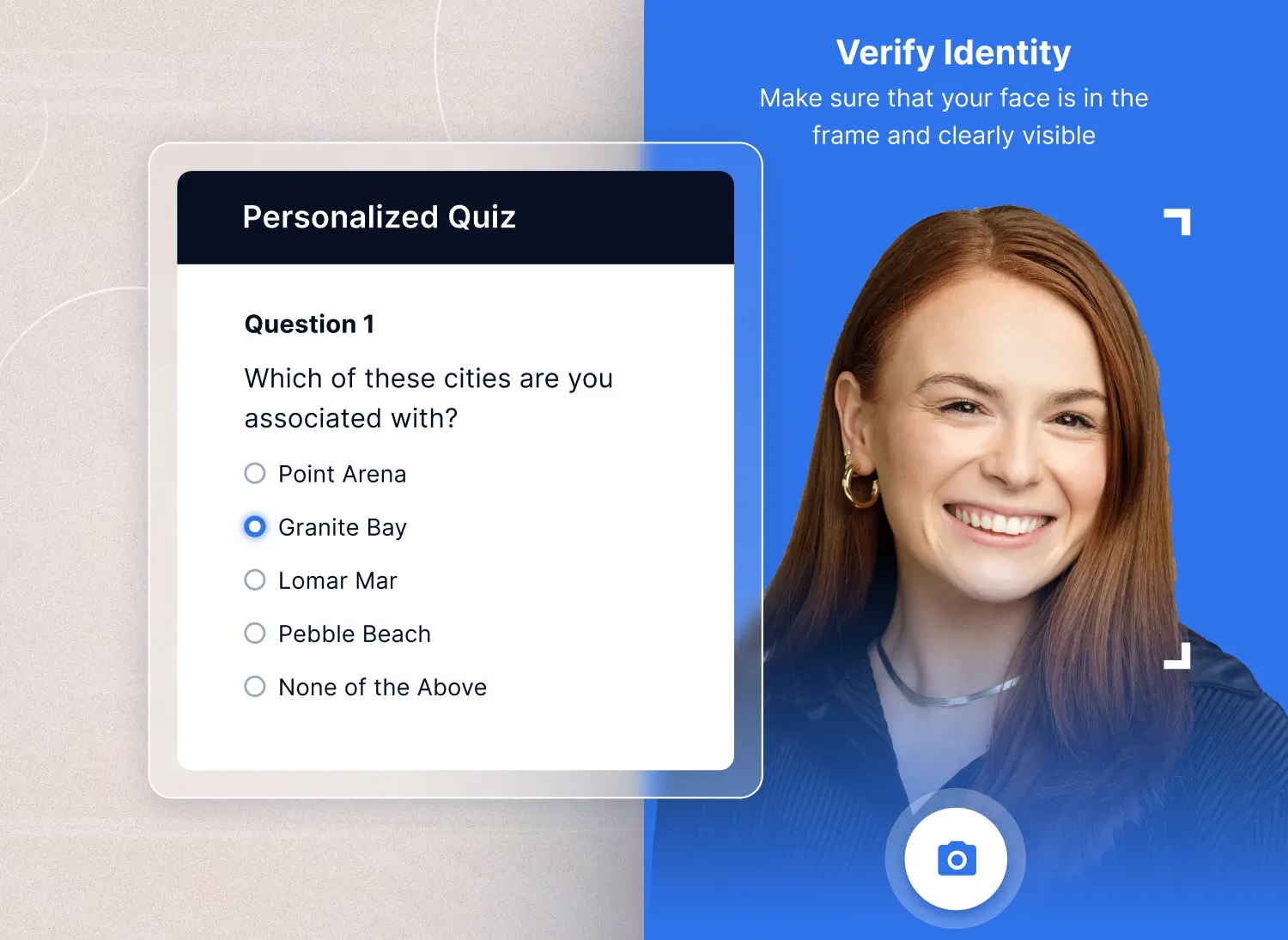
Biometric identity verification ensures that the person applying for funding is actually who they say they are. Applicants submit a picture of their photo ID and a selfie in real time. The software verifies that they match. It’s a quick process that keeps legitimate applicants moving through.
Knowledge-based authentication
Knowledge-based authentication is another tool to quickly verify an applicant’s identity. They answer five quick questions that reference things like past addresses and known relatives. They’re easy questions, unless you’re a fraudster.
Third-party database checks
Grant management software can provide a quick verification that applicants aren’t on lists that would disqualify them from funding. You can check if an applicant is a politically exposed person or has sanctions. Plus you can verify EIN numbers with the Candid database to ensure a nonprofit is legitimate.
Effortless post-award monitoring
When you don’t have to spend effort chasing down progress reports and receipts, you’re in a much better position in terms of compliance. Your GMS should make post-award monitoring essentially automatic with easy ways to schedule reminders, issue reimbursements, and access compliance logs.
Reporting across programs
If impact reporting in your GMS doesn’t allow you to report across programs, you might be missing the patterns, gaps, and anomalies that would alert you if something’s not right. Expansive reporting capabilities also means you’re ready for compliance changes. For instance, if the administration enforces new reporting requirements, the agencies with strong data infrastructure will be the most prepared.
Find the GMS with fraud protection built in
For government grantmakers, the compliance paradox is never going away. But the right grant management software can keep you from sacrificing the constituent experience in the name of security.
See Submittable in action to get a glimpse of what it looks like when your grant management software doesn’t make your compromise.

Laura Steele is a content producer at Submittable focused on the world of grantmaking and corporate giving. Her work often explores the connection between technology, equity, and social good.
A corner of the internet for grantmakers
Sub*stance is a publication by the team at Submittable. It’s a destination for the people doing the real work in the grantmaking world. Our aim is to craft pieces that dig beyond the surface level, where the real substance sits.
Explore Sub*stance