Live Panel Recording
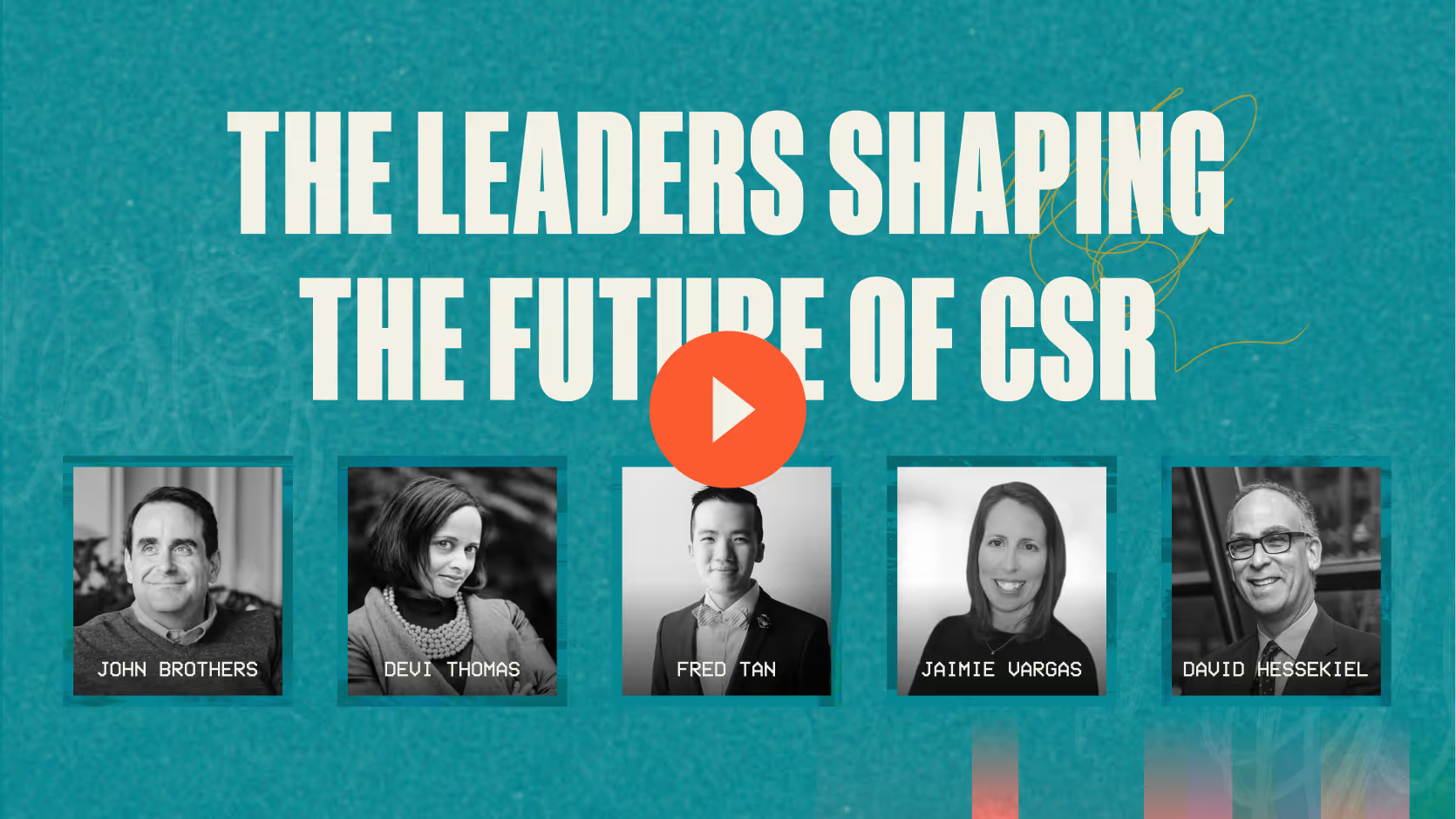
Join our five guests in a wide-ranging conversation on the future of CSR moderated by Sam Caplan. Together we talk through topics like the role of trust-based social good in CSR, how to form meaningful partnerships with both nonprofits and other companies, and much, much more.
ATTENTION: This is an automated transcript and you may see some mistakes here and there. We’ll have an official transcript soon!
Welcome everyone to Impact Studio twenty twenty three. I'm Keriann, chief marketing officer at Submittable, and I'm so excited to kick off today's live panel. One thing we hear over and over again in the world of CSR and social impact is how important it is to make space for conversation and collaboration.
That's when we learn from one another, challenge our own assumptions, and build a collective understanding of what's possible.
That's what we want this space to be. A big thank you today to our panelists for being part of this event. Truly, it's their brilliance that's made today possible. And a shout out to the small but mighty team that's been working hard these past months to organize this event behind the scenes.
We're so lucky to have their talents on our team. Finally, thank you for stepping into this space with us. A quick introduction to submittable, host and sponsor of today's event before we get started. Simitable is a social impact platform that powers your community investment, employee engagement, and grant making programs.
It's built to help you and your team follow through on your promises to your community, your employees, and your c suite. The big innovative ideas we're talking about today, we design our software specifically to help you fold those ideas into your work. If you'd like to learn more, we'd love to talk to you. You can reach out to our team at submittable dot com.
Now I have the pleasure to introduce my colleague and friend Sam Kaplan, hope of today's event. Sam is the VP of social impact at Submittable, the former head of technology at the Walmart Foundation and CIO of the Walton Family Foundation, He's also the host of Impact audio, our social impact podcast. Over to you, Sam, let's go.
Thanks, Diane. I am so excited to be here. And today, I have five guests joining me. Each of them is shaping the future of corporate social responsibility in their own way.
And over the last few weeks, I've had the opportunity to sit down for one on one interviews with all of them. And hopefully you've had a chance to watch those five short videos if not, please make sure to make some time for them. They were some of the most inspiring conversations about CSR that I've ever had. And though each person had a unique perspective, I was struck by one consistent idea that arose, and they each articulated a future in which CSR is more empathetic and symbiotic.
So empathetic in that programs center the people and it honors their humanity rather than running rough shot over it and symbiotic in that people and organizations are acting with a deeper understanding of the ways that we're all interconnected.
So that's where we're gonna start the conversation today. This vision of CSR is both more empathetic and more symbiotic. And what that actually looks like in practice. So we're gonna save some time toward the end for audience questions.
So feel free to add questions using the Q and A function here in Zoom, and also feel free to introduce yourselves in the chat. Maybe stating where you're from or where you work or when your job role is, And I hope that you will continue to use that chat throughout the webinar here to tell everyone your thoughts and your perspectives. I'm hoping that we have a really dynamic site conversation taking place there. So to start out, let's meet our panelists.
If each of you could just give quick unproduction of who you are and what you do. And I think I'm gonna start with you, John Brothers, if only because you are in a really interesting spot today.
Yeah. Thank you, Sam. And thanks to the whole submittable team. This is really, amazing and so proud to be here.
So I, am the president of the T. Rowe Price Foundation and of T. Rowe Price Chair, which is our donor advice fund. And I'm typically based in Baltimore.
But today, I'm calling in from Belfast, Northern Ireland, which is super exciting, although it's rainy, which is not new for Belfast, but nonetheless, that's where I'm calling in today.
Nice. Thank you so much for, joining us, John. And, next, how about, Fred Tan? How are you Fred?
Thank you. And thanks for having me, Sam and team. My name is Fred Tan. I'm the head of global social impact at Hewlett Packard Enterprise.
I also help oversee the H. The e Foundation, Hewlett Packard enterprise, if you're unaware we're the leading edge to cloud company. We do data and AI. We do super computing as well.
And in my role, I get to oversee what we do, not just philanthropically, but how we are creating more responsible and ethical business, great to be on a call with everyone.
Awesome. Thank you, Fred. And, let me pass the microphone over to my friend Debbie Thomas from Microsoft. Hi, Debbie.
Hi, Sam. Hi, everyone. Thanks for having me. I hope, everyone can hear me okay. We had some technical difficulties getting on.
Excellent. So so look, thanks for, including me in this. I'm from Microsoft philanthropies, and I come from a robust history in the nonprofit space.
So I'm really, really excited to be here both representing my background.
In that sector. And then also my work today in Microsoft philanthropies where I work to bring together our community of three hundred and twenty five thousand nonprofit So very, very exciting, amount of work that we get to do at Microsoft, particularly in this era of AI.
So back to you soon. Awesome. Thank you so much, Debbie. Okay. How about, David Hezakil?
How about you go next? Okay. Well, I'm I wish I was in something place exciting like Belfast. I'm in the bunker, the batcave, otherwise known as my office here in Rhine, New York.
In Westchester County. And, I am the founder of Engage for Good, which brings together people from the corporate community and the nonprofit community to find ways to do well by doing good together at a national conference each year as well as through digital connections and webinars and and and the like, throughout the year, and it is an absolute thrill to be a guest of submittable and to be looking I was gonna say old friends, but Debbie's not old. Friends of long standing here on the, on the screen, as well as, so many of you on the webinar chat. It's great to to see you all.
Awesome. Great, David. And by the way, I go to that amazing conference every single year. It's one of the best out there, and I totally love it. And I will be back year, so I can't wait to see you in person again.
And last but certainly not least, our friend Jamie Vargas from Electronic Arts. Welcome aboard Jamie.
Thanks so much, Sam. It's, it's great to be here. I've been looking forward to this conversation.
I love to talk shop and learn from people in the space.
So I'm calling it from the San Francisco Bay Area, Jamie Vargas, and I have the great privilege of being the head of social impact for electronic arts.
We inspire the world to play, which is a great space, for social impact to do its work and really pull a lot of levers of change, to create transformation in, you know, global communities around the world with our players through our product, through the passion and talent and time and skills of our employees.
So it's good work, and I'm excited to hear from everyone and learn from what I see on the chat.
Really appreciate the opportunity.
Of course. Well, again, thanks to each of you for being such willing and amazing participants in Impact Studio twenty twenty three.
So for all of our registrants, you you probably know by now that I had the opportunity to interview each of our panelists and, worked with my amazing colleagues at submittable and put together some really, really super cool, video interviews and all of those are live now. So you have access to every one of those. I hope that you'll make some time soon to go check those out. If you haven't already, And, sort of the the way that we're gonna do the skies is we've intentionally kept things, sort of as free flowing and as possible.
And while I have some prepared questions here, I didn't send them to you in advance. So, you know, you won't know what's coming at you. And my hope is that we'll keep this really conversational. So I'm gonna, I have some questions that I'll direct to you guys individually.
And for for everybody on the panel, like, please know that I do encourage you, like, chime in and let's really have a conversation So even if the question's not to you, but you have something that you'd like to add, like, please go right ahead.
And, John, since I introduced to you first, I think it's only fitting that I start with you here. So I know that when we talked, you had mentioned that, the T. Rowe Price Foundation has adopted this trust based approach to social good I'm wondering if you can share a bit about that decision and strip exactly what you were addressing when you chose that trust based approach. Yeah.
Thank you for the question, Sam. So our approach to our social good was born out of the unrest that happened in Baltimore in twenty after the death of Freddie Gray, which also just coincided with my first week in Baltimore. And so I you know, my original kind of professional backdrop is that I was a community organizer and and good community organizers always hope to be good listeners to community. And so my first foray into a community in Baltimore that was really in crisis, was just by listening in in in community.
And so I would sit in churches and libraries and community centers and, you know, I'm a relatively I was a new philanthropist at the time, which, you know, most folks don't leave these positions. So it's almost like seeing a unicorn. And so jumped into kind of just listening to community and what I often heard was less about this is the issue that we need to work on although that was there. Most of the time what I was hearing is the way in which community and its institutions were treated by those that said they wanted to support them, the how of its work.
And so as we started to look at our own philanthropy or the industry of philanthropy, we often saw that the the approach, the how the bedside manner of corporate social good or philanthropy or even large anchor institutions was also really flawed and that community members were largely saying enough is enough. Like we we are experts in the in our own self determination and how we want to proceed and and they were saying that in many ways. And so for us, we started to look at, well, what does that mean? And how do we think about our bedside manner and how we approach community?
And it meant our applica, you know, things as simple as our application processes or moving to general operating support or multi year support or things like that. But then it also had us questioning the way we, you know, saw evaluation or governance or, you know, walking into community and just making sure that we were good listeners and that we weren't saying what we thought was important for them, but that we were listening. And and, you know, the last thing I would say is what we found is, that communities like Baltimore, but in all of the places where our panelists are, those are often cities, especially in cities that are areas that are disinvested they struggle with infrastructure.
And this is what companies have in abundance is infrastructure. And so for us it caused us to look at what is the way in which we can use our corporate infrastructure to really support the infrastructure needs of local community and it caused us to look beyond just grant making or beyond just traditional ways of doing work and really thinking about one, when we step into community, we want to do it in a way that community is leading us and that we are marching to the beat of their own self determination. But second, we are bringing the full infrastructure of companies to be able to bear in local community. And so for us trust base is everything, it means being good it means having accountability partners that dig their thumb in their sides, our sides when we're not walking the right path, but it's also making sure that we are stepping into community with the right sources.
And and Fred, when when you and I had our prior conversation, I had said that you were the first corporation I had come across that was having conversations around trust based philanthropy or trust based social good as you call it. And and while that conversation is pretty dominant in the private philanthropy sphere. I wasn't hearing much about it in in the corporate sphere. And you mentioned that you've had like a couple hundred people reach out to you from like different companies who are really interested in this approach. And so I'm just wondering, like, for the rest of our panelists is is a trust based approach, something that is, you know, making the rounds in your organization, are are any of you guys thinking about this or you know, start starting to implement those sorts of trust based processes around community and self determination that that John was talking about.
Well, I thought I would just jump in here for a second. First of all loved everything you said, John. Really, really exciting to hear that this is the direction T. Rowe price is going in.
I think a lot of corporate philanthropy is thinking this way and has been for a while, actually, but it sort of took a few some key philanthropists are ripping the Band Aid off, if you will. And saying this is how we're now going to start giving. This is how we now expect, you know, to be, at the table and and really as equals with nonprofits, right, to be able to address these issues and to understand that the experts are the the communities themselves and the problem solvers in that community. I think that's really exciting to see what what I think is also interesting about about the trust based philanthropy conversation is there there's a term that I think it was one of one of the the nonprofit, bloggers who who everyone reads came up with called my Right?
Multiyear general operating dollars. That's what everybody wants is my god.
And and I remember having this conversation in in a CSR role years ago prior to to Microsoft philanthropies and sort of thinking about how It really wasn't about unrestricted funding versus restricted funding. What it came down for is what is the restricted funding actually being used for? And do we as a CSR and, experts have the right to ask that question? Right?
I mean, that's really what the conversation has done down to. It's not so much. Do we trust the nonprofit to do the work? We've been investing in that on profit.
We know that. Right? But do we really have the right to say this is unrestricted. This is restricted.
What does that actually mean? Where does it go? I think these types of conversations are shifting a little bit largely also because a lot of the unrestricted funding goes so much to programming, that we just don't see, but a lot of the transparency in the financial tools that nonprofits are using these days allow us to see that. Right?
And allow us to know that this investment actually goes towards very specific programmatic strategies and communities. So I think that's where I'm I'm enjoying the conversation these days is to take a look at how at how that dynamic is changing, but also to take a look at how nonprofits are actually operating differently as a result of the dynamic.
I lost that. And if you can pop in there too, first, to John and to everyone and call it some more condolences over the news of out of the pair, and the force that she was in your community, and and to all of us who are not in that community, really heartbroken by that. I I love the conversation on trust based philanthropy, and I think, what what we're trying to do in all honesty, like what you said Sam is to question the parodenomics that are present whenever capital allocation decisions are made and that proper dynamics are real whether we look at it in philanthropy or whether we look at it in venture capital anytime dollars or services are traded, there is a power dynamic. And I think we need to break that, especially in the philanthropic world because of what we're trying to achieve.
I feel like sometimes there's a misconception that the house based philanthropy doesn't come with accountability. And I think that faults.
But what I think we're moving toward through some really grateful for is a less transactional form of philanthropy. A philanthropy that's more collaborative that is true partnerships instead of an exchange for goods and services.
As maybe as maybe we operated in the past. So really grateful for the way that things are shaping and and then, you know, in in a lot of conversations that I have.
I think a question that I tried to ask myself as an individual or represent the Hewlett Packard or the Hewlett Packard Enterprise Foundation is what are my blind spots? And what do I need to do to upend far dynamics so that there can be a more collaborative ecosystem of change. So just really grateful for bolt on and Debbie is coming.
Yeah. For sure.
David, you you've been around this work for a while. I think it twenty two or twenty three years that that you talked about in our in our prior conversation.
And I'm really sort of in sired by this whole conversation around life community and self determination.
And I'm I'm really curious, like, do you see a shift, David, and how corporate leaders are framing the relationship with community members and employees. So is it different today in terms of, like, what we're hearing from John and Debbie and Fred? And, you know, opposed to how it was, you know, ten, fifteen years ago?
Well, I think that, I really love, the treatment that that Fred gave to this because I I think the idea that that trust based is not, just an open checkbook and no accountability whatsoever, which is what it sounds like at times. And I think that, it is a thoughtful approach to this type of relationship between, those who give and those who who who receive.
And I think that that is certainly, a tenant that we're seeing more and more over the years, where, folks are trying to really look from the, perspective of the recipients and go do we really need this information Do we want them to be spending as much time filling out their impact reports as they're actually doing on the programming and those sorts of, wasteful exercises that end up costing, the nonprofit a great deal of funding. I I think that there's been a lot of progress, in that direction from where we were twenty years ago.
Yep. Jamie, is this anything that you and your colleagues are talking about at at electronic arts?
Definitely. Yes. I mean, I'm not sure we're using the the the jargon, you know, trust space and and and and for although I I actually really like the this trust based social good, really, really is great. But but the the doing of it, I think, is is part of what I'm seeing.
And what I'm really excited about is sort of organic nature of how it's happening rather than, then, this is our approach. Let's implement. It's more like This is sort of what's happening and opportunities to learn and grow, which will will sharpen and deepen our approach. So I think it's got a lot of legs from that point of view.
And so a lot, I I'm really excited about a lot of the conversations I'm having with with leaders and key stakeholders across the business. It's really about centering on, you know, being much more outcomes oriented and then looking at how we can really deepen and expand our engagement to sort of think somebody said something about, you know, transact it was kind of shipped from a transactional to more of a transformational nature. Of the partnership, and I think that assumes a lot of shared responsibility.
You know, so for the the corporate side of that of that partnership, where we do have a lot of power, a lot of resources, a lot of capacity. We need to think very different lady we need to innovate just like we're developing, you know, in our case, you know, this amazing powerful experiences for millions of players around the world through our through our game, through our product, through our IP.
We can apply that same sense of creativity, fun innovation, desire to do something better, to do more to think differently.
How we show up in, you know, in in our approach to social impact as well. And so I think the incumbent with that comes the the demand that we think differently about sort of these levers of change that we can pull, the resources that we can deploy expand our view of what philanthropy is or isn't or what it looks like.
How could we do something different? And so I think that's what we kind of that's that's what we can bring to engender kind of the trust, I think, in the in the partnership.
Because we often, you know, we have a lot of expectations for the mission driven organizations that we're working with to our, you know, PS making change happen, you know, daily, hourly, in incredible ways. Right? We have a lot of expectations there.
And so I think it's sort of incumbent for us to apply that that same high view of expectations, you know, internally too as we kind of think about the the the approach. And so, You know, while we might not be labeling it, a trust base or any particular view, I think we're I think we're getting there. And, I think it's kind of the right kinds of conversations, especially to engage leaders in that are really pushing us to transformational durable, sustainable capacity building, you know, that's where you can start to sort of build out and maybe get to some of that systems level change. Even thinking about differently about, you know, companies don't have to go it alone and, often the power of collaboration I mean, I think that's frankly the nonprofit sector, does that really well in a lot of instances, and we can really learn learn from that.
And engage across, you know, peer companies, you know, and find and find points of collaboration too.
It's a perfect segue here. So, Debbie, I know that in your work, you have a lot of collaboration directly with nonprofit organizations.
So sort of continuing on with this theme of collaboration, what do those relationships look like when they're working really well?
Yeah. So, first of all, just kudos Jamie on everything you said. I was just, yes, yes, the whole time because I I, a hundred percent agree with that idea that we are looking at collaboration in a very different way. Yeah.
Microsoft philanthropies approach is a hundred percent about collaboration. And the minute that I know something is successful, particularly a nonprofit partnership or an engagement is when I realize that that nonprofit is working with more than just Microsoft philanthropy piece. That's the minute. Right?
Because that internal stakeholder collaboration in a company the size of Microsoft to be able to say, hey, you're working with our skillings teams. You're working with our technology teams. You're working with our research team.
That is the moment where we think, oh my gosh, we're bringing something to the table. Right? This nonprofit that is solving one of the world's toughest challenges in conservation is actually working with every single division, of this company and that's where we're bringing all of our might. Right?
So that that's the first first, element of of, partnerships that I'm looking for. So if I'm sitting at a table And the only thing that's being asked of me is a three hundred thousand dollar check. It's not to say that I wouldn't consider that proposal or I wouldn't consider that that opportunity to engage for a really important cause. It's that I'm looking for the what else.
Like, how can we co problem solve here. What does what is the what is the role that we can play? We are not the experts you are, so tell us where we might be able to help. So so that's the first.
And and the second I would say is really around this idea of a data driven approach. Right? Are is is the social impact sector, specifically the problem solvers, are they getting together and looking at data. And you'll see me refer to problem solving a lot.
Sam knows this about me. I don't like to refer to it as the nonprofit sector because they're defined by what they're not, and I very much want to be defined by what they do. So this problem solving sector is out there. Right?
Talking about all these problems, are they looking at data in the right way? Do they need help with their data? It's the first question I will ask. Right?
How can we take a data driven approach to some of these solutions? And that could be things like refugee placement. We've we've taking a look at that. It could be things like protecting our forests.
We've looked at that. It could be data as it relates to, you know, matching blood types. We've looked at that. So all these different ways that we know data has the capacity to give you more information that allows for predictive problem solving.
And so how do we get into that realm a little bit more and that that notion of sort of forecasting change and give the nonprofit the power to do that and then the the last thing I'll say that that really defines a successful collaboration is is really being really willing to take risks and make mistakes. I'm a really big fan of making mistakes. It's how I got this far in my career.
Pretty routinely just screwing up. Right? And then deciding that, okay, that didn't work. I won't do that again.
Let's try something else. And I think in a lot of these collaborations, we, possibly try something often with two people at the table and then decide, hey, the two of us are not alone. We we need to bring in others. We need to bring in other experts, and we might call submittable and say you are grant making geniuses with your technology help us here.
Help us figure out how to bring this technology along, or we might bring in another partner that's that's from the ecosystem or from the government and say this this requires all four of us at the table. So I think that inclusivity and the willingness to make mistakes and try again really, really important.
Love it. And I'm so happy that you brought up data and technology, Debbie. You know, those are probably my two all time favorite topics.
And, you know, I this is a question not so much for for you, Debbie. I'd love to hear you chime in on it, but really for anybody on the panel. And we are just in the thick of artificial intelligence and GPT, and Debbie clearly, Microsoft has this ten billion dollar investment in open AI and It's probably the topic and the question that I get asked about most when I'm at conferences or, you know, talking to submittable customers or customers. Like, everybody is so curious about artificial intelligence and GPT.
I would just love to hear, like, any examples, like, what does everybody think here. Like, first of all, is anybody like incorporating GPT or more broadly AI into your work or throughout your own organization you know, or were you taking more of a, like, wait and see approach to, because there are so many, like, philosophical questions around, like, equity but that still have to be answered around this. I'd love to just hear from you guys what what are your thoughts on AI and GPT?
Hey, Sam, for the first thing I would start with is whether it's data and evaluation or it's AI at the root level that has to be owned by communities.
In order the idea of a community saying This is our north star and this is where we want to be and whatever tools and resources that are needed to get there, they have to own that and it has to be it has to be intertwined with their ability to learn.
I like data as much as the next person, but what I know is is that funders, companies, and others have often used those resources, in communities to in really negative ways. The whole era of strategic philanthropy was one of the most challenging things that ever happened to our sector. And the idea of a funder walking into a community and saying step on this scale or measure this or count this has totally created an industry of nonprofits that don't know how to learn for themselves.
That's a real challenge, right? I wanna know if communities what they think their north star is and what tools and resources they need to help them get there. That's where the infrastructure of my company can be helpful. I know most grassroots community based organizations don't have R and D departments and they certainly don't have the structure to think about AI in the ways that companies like Tiro and Microsoft and others do.
So what I need to think about is number one Are they ready for that and can I help them get there? But what no one in any community on this goes to David's point on accountability is sitting back and saying I can't wait for T. Rowe Price to tell me what to count. No one is saying that.
No one is saying I can't wait for the AI structure that TRO is going to give me to help me to help me do this. They're not saying that. And so we need to build capacity and infrastructure and local community based organizations so that they can nap because what they know better than us is where they wanna be. And if we can develop the infrastructure they need to help them get there, whether it's data and accountability or AI or whatever, the world's just gonna be a much better place, because of that.
Yeah. I'd like to talk to that. I I think I'll just speak from the perspective of a tech company. Sometimes we over index the technology really, really quickly and sometimes technology is a good tool and sometimes it's not really needed. I was actually in a meeting last week at the United Nations General Assembly and some technologist said we don't need another chat bot or a dating app for that matter.
We need to apply technology in the right way, and I think the way that we should do that is based on what are the community outcomes that we'd want to achieve or that the organization wants to achieve. And then what's the best route to get there? And sometimes the digital part of the piece might be crucial to improving, the way that an organization runs. But sometimes that's not the first piece that we should be focusing on.
And I think for us as an organization, we are grappling with that to see what is our role in helping with the problem or perpetuating the problem and then ensuring that we're engaging the right way. But just one example of where I think I've seen one of our partners use AI in an incredible way, and students across the world sometimes are locked out of social capital.
And their access to social capital. A lot of the times determine whether or not they're able to get into the school of their dreams or the job of their dreams or even understand what options are available to them. And there's an organization called Career Village. They started as almost like crowdsourcing nonprofit where folks can answer questions that students have about a particular career.
And we've been supporting them in that endeavor quite a few years, but recently they thought we want to be more useful and they came up with a generative AI career coach. That helps students with mock interviews, with resumes, with career assessment, and we thought that is actually a pretty cool innovation. If you want to do it, we'll or you and this new endeavor that you're trying to accomplish, and we invest it in their, in their effort to to develop this product. So I think again, We focus first on the outcome. We leave the innovation to the people at the front lines instead of dictating like what John said when data should be used, how it should be used, and how technology should be applied?
Yeah. I and if I could just jump in here too with, you know, my AI hat on as well from the from the Microsoft lens just to say that there's just simply no part of artificial intelligence that doesn't need human intelligence.
It's as simple as that. Right? There is absolutely nothing that's coming this way that's going to take away from the incredible work that we do serving humanity as nonprofits.
So I think there's an opportunity for us to merge the two, but to always understand that in that power dynamic, the humans always going to win.
So I I wanna make sure that that that is, you know, really, really something that we focus on as we approach looking at different ways that AI can help communities.
Now the other thing I would say is completely argue, completely agree with John and with Fred on the community based approach and community led approach, which is effectively what we're talking about here today. The the number one response that I'm getting from nonprofits that we talk to day in and day out, and I I have some statistics around this as well. Is that sixty eight percent of nonprofits don't actually even know where to begin using AI, but ninety three percent want to.
And that really means we're starting at the base. Look, the simplest forms, we're not talking about predictive AI and machine learning here. We are really just talking about how can I use this to write a letter to my donors and make that super easy and creative for me but still keep my human touch alive? How can I learn how to do some prompt engineering here with this chat GPT thing?
Which is democratized. We're now all coders. Remember, you're a coder, you're a coder, you're a coder. So This is this is great.
We've just democratized an entire, you know, we've leveled the playing field, to be able to to really do anything we can with this with this generative program. So I think for me, that's where I'm starting in my own life and my own day to day work is the simple tasks. I'm recording meetings transcribing them with AI. I'm often using the translation services for global.
And I'm also doing it to write letters and invite speakers to events and, you know, things like that. And it just helps take away some of the day to day drudgery, if you will, and helps us focus more on the task at hand, which is community building. And is, leading with that human touch. So I think that's that's probably the the last thing I'll say on on AI and communities.
You know, definitely I just wanted to offer some something else here.
I totally really appreciate it echo what everyone was saying. I think another know, I've spent a lot of years in technology and technology adjacent companies. And so, and, Under I mean, really, the the power of technology just, you know, can't be overstated. I I think we all experience it in many different personally professionally and otherwise.
I think one of the things, I don't know if it's a keep me up at night, but it's certainly on my mind is just how the emergence of AI and and just other, you know, innovative technologies. Right? They do also, unfortunately, you know, just exacerbate the sort of have and have knots that we're already experiencing ten, a hundred x fold. Right?
And so it's just sort of even more important to address that notion that not everyone has the same access and opportunity to experience the benefits of the transformational power of these technologies So I think as, as in the corporate social impact space and and funders, grandparents, those, you know, with resources to offer, as we're thinking about, like, how do we address inequities in the communities? However, we show up, right, in an authentic way when we're investing in communities, building, strengthening them, you know, That needs to be part of the equation. Like, I think for a long time, we've a lot of us probably have been in the mix of thinking about education inequities.
Right? And then you start to roll in economic, inequities. I think there's been a lot of rich discussion around environmental inequities that come up as a reduce. And I feel like there's something in the space of this.
I don't know what you wanna call it. You know, technology inequities or something that goes beyond the the sort of digital divide. Do you have access to a device?
Do you have then access to connectivity and data. Do you have, digital learning to enable you to use the the device and the data? But I think there's gonna be something something new that maybe we don't quite even know yet. We don't even know how to how to put a term around it. But I just think it's something important for us to think about as we also think about the powerful ways that this very same technology can help us all work better, work smarter, you know, achieve more change, There's an there's an inequity piece there too that I think is an important part of the conversation that's emerging. You know, it's involving in real time that we're gonna have to kinda get our arms around and make sure that we're kind of factoring in when we think about, our investments in community.
Well, just, Sam, just for one second to build on what what you were saying. I'm just coming off of a young the celebration of Jum Kipur, the marking of Yamipur, and I would guess that ninety five percent of the rabbis in America gave at least one sermon on AI and probably made at least one reference to the Barbie movie.
I won't talk about the Barbie movie right now, but I think that it's important to recognize the ethical component of where we are right now.
I am so much not the technologist that will think profound thoughts about about this. But we the the AI has the potential for doing great good and for, enabling us to be more efficient and more effective.
And it also has the possibility of, being the cheap way out and taking away work from a lot of people, who if we don't think collectively about how to employ them, employ them in in a in a fashion that will earn them a decent living, we're gonna have yet more people who are struggling to make it in the twenty first century.
Yeah. That is so well said, David. It reminds me, at the last at EFG conference, we had a very robust panel discussion around AI. And, you know, interestingly to me, like, you know, as a technologist, I I and others, I think tend to get very excited about, like, how this technology can play a role in social impact. But I think that the majority of the conversation there was very similar to the points that you're making you know, around equity and ethics and ensuring that we are, building our AI platforms in a way that is, you know, fair and equitable to everyone. You know, and centered around people centered around nonprofits, right, that it's not really about the technology. It's more about the people.
So So happy that you raised that point.
I think that adjacent to technology is innovation. And Fred, I have a question specifically for you. I know that you have been working a lot on some specific initiatives that focus, on innovation I'm wondering if you can talk a little bit about what it takes to support innovation, and why you at, Hewlett Packet Enterprise have prioritized this as an initiative.
Yeah. For sure. Let me start with the let me start with the later question first. If you look back at enterprise, we think of three main challenges that us as a company with a right to write a right to play, if you will, because of who we are and what we can bring to the table, health, climate, and human rights are three areas we've identified as able to make a difference in. And we take a look at these three areas and I'll just give climate as an example.
We need more innovation and we need more innovation to hit market scale if we are to create a sustainable future if any company is to reach our net zero goals. For example, we need more innovation and more innovation in market scale. The problem, however, is one, there's a huge inequity in how resources are distributed and the innovation ecosystem.
So for example, fifty percent of global venture capital goes to New York, Massachusetts in California.
Point three seven percent goes to Black founders. But what this means is it's not just a picture of an equity. It's a picture that there are lots of innovations that innovations ecosystem is overlooking. And that means that there are solutions that never even get to see the light of day and never get the chance to succeed. So for us, we think How can we support the broad ecosystem so that we cannot only uplift communities and communities of innovators, especially ones that have been traditionally overlooked, but how can we speed up the rate of solutions that have the potential to change noise? And when we do it, the way that we do it at HPE really is through partnerships.
How can we work not just with folks that we give grants to? How can we go beyond the dollar? Like what Debbie said and make connections with other internal teams?
But also how do we collaborate with others? Our customers, our partners, public sector finance. I think that was the question in the Q and A. How do you unlock more finance maybe SDGs. In all honesty, it has to be that collaborative approach to work together between competitors, customers, partners, public sector government.
And if you will, and I'll just, like, give a critique of corporates because I can because I'm a corporate The move from maybe how philanthropy was done enough fast to how it's hopefully being done now is that experts are hopefully not building up little kingdoms of philanthropy and unique things that they're trying to accomplish We are trying to help the community. We're trying to break the barriers down. And because of that, there is more room for active collaboration and partnership. Again, you know, we we're starting to do that in the climate space. Next year, we'll do it in health care. We'll do it in human rights as well, but I I think innovation is so key to solving global challenges.
Yeah. And and you were at Climate Week if I remember it correctly from, from your LinkedIn post. How did that go? It went great. It went great. And so, you know, on the climate, we'd know if we believe that innovation has the potential to support climate change globally out of all the incubators and accelerators supporting startups in the world, only two percent of them focus on clean tech.
Only twenty five of them are located in developing economies.
And that's a scary picture of innovation. FinTech is great, right? Like and tech is great. But if we want to solve the world's challenges, we need to create a better ecosystem. And, you know, loved climate week and the opportunities to learn to be put in an acceptable position to learn.
Yeah, feels great.
Very cool.
Jamie, I I have one more planned question here, and then I wanna transition over because we've gotten some great, questions from the audience today. And so a theme that emerged, but, like, every one of my stations with you was this concept of, like, social impact becoming more participatory and less top down and more side to side by incorporating our, our coworkers, our colleagues, even our customers.
And so would love to hear, like, your perspective on, how do you see a participatory or a collaborative approach fitting into employee engagement? And I'm wondering if you can specifically talk about this idea that you shared with me, you mentioned that during your introduction that electronic arts has this huge community of of players, right, who are customers, and you've talked about, like, you know, wouldn't it be wonderful if we can figure out ways to begin to incorporate them into the social impact work that electronic arts is achieving through, the work that you and your your colleagues are doing.
Yeah. Absolutely. I mean, probably like many of us here, an important, you know, stakeholder or sort agent of change. I mean, I like to I like to actually call out our our thirteen thousand plus employees, you know, around the world.
As as change makers because they have personal passions. They have incredible skills and talents. They have a network They have professional connections. They have the pulse of their communities. They're embedded and they're connected with organizations. All of that, we could hopefully mobilize harness in, again, in in an authentic way, not in a voluntold way, like in a real way.
To, you know, to put into action. And I I think kind of going back to maybe even where our conversation first started, that's an important part of how we listen and learn from the community because we can leverage what, like our employees, for example, what they're seeing, what they're hearing, how they're plugged in into various communities and regions all around the world, is an important input to help us understand what's happening on the ground to rationalize our thinking and our approach to identify opportunities and gaps. Know, to kind of seize moments. So I think it's a that that there is an incredibly strong, powerful influential group.
Right? And I often think of, art our team and sort of our, you know, champion network ambassadors. Right? Where it's about curating and creating experiences and opportunities that, help employees kind of put that passion and energy.
They want to do something and creating spaces for them to take action. Right, to do something, to to give their their time, give their money, use their voice and advocate, all the ways that they can they can take that take the passion and energy that they have and harness it in. I mean, I think it's one of the greatest kind of components of of how we could create positive change and make a positive impact, around the world, of, of, of leveraging that. You know, and it it doesn't It's not without its challenges.
Right? People do bring a lot of passion and energy and interest. Maybe they don't all ladder up to your corporate strategies. So you have to be willing to listen, learn, evolve, which frankly is good practice for the work we should be doing every day with our community based problem solving organizations.
So you might you might start with your critical friends, right, those right right around you, right at home to help to push you. To think differently, and deepen your engagements, consider other opportunities, other points of view. So I think it's just a really powerful force. And, you know, for electronic arts, we also have this incredible community of our players.
And people that play and engage in and out of our our game and entertainment experiences. So I think that's a very powerful community, another very deeply influential group, to guide and shape, our thinking and and and what we do and ways to to activate and engage them when you think about, I mean, the reach extending kind of your circle of engagement or kind of, you know, the reach of your network is very, very powerful, very powerful to deploy. So, I mean, I think a lot of the same listening and learning that we could and should be doing every day in the community. We have to apply that same mode internally and not just to sort of, you know, the people with the right titles or in a c suite or in a leadership position.
You know, I think all employees can be can be leaders, capital l, little l, and and help shape and drive what you're doing. So creating feedback loops and venues and real authentic willingness to engage and listen and learn can be super powerful, to to transform what you're doing and kind of again move beyond that sort of tran traditional kind of transactional, let's paint a mural at a school kind of approach, which I've done, and I'm happy to do again to deeper engagements and other ways that you can really tap into the the the talent, the passion, the desire to act that many of us experience with our colleagues at our respective organizations.
Hey, Sam, I just want to add on that. I think Jamie's point was is is such a such a good one. Obviously the work is to ensure that we are being led by community and that they're becoming learning organizations that that also goes inward. And so for us, you know, our our goal is also to ensure that, you know, I met with our CEO, about a year and a half ago, and and and his comment was, you know, I want our associate to really understand community in the same vein in which you understand community.
And so We don't want them to step into community with the same kind of challenged mind frames that often come from corporate communities and that can do damaging communities. So we started doing bus tours throughout community with our community partners, but what we do on those tours is show not only hey, here's really great stuff, but we also show where companies got it wrong, right? And so there's a playground in West Baltimore that like fifteen companies came and built, because somebody said, hey, let's go build a playground. That should be a solution to unrest, right?
And that playground has sat there unused for eight years. No community members ever asked for that. And so that is always a stop on the the bus tour and we fill it with our associates. They come out of that bus tour.
Just better have a better understanding of the wavelengths and the way the community responds, but they also understand that when they step out on behalf of our company, they're also could potentially be bringing some challenging behavior and that they need to account for that when they when they have the privilege to walk in those communities.
Thank you, John. I I wanna get to a couple, questions from from the audience here. This one I think just, dovetails perfectly in so why Jamie and John, and and really everyone has been talking about, throughout the, webinar here. So Sarah, Colison, had a questions regarding reference to Fred's comment on power. And she said, can any of you talk about experiences you've had where shifting power to local communities or grantees got uncomfortable.
How you handle pushback from within your own organizations and what the benefits were of pushing through that discomfort?
If it's not uncomfortable, then it's not working. I mean, I'll just simply say like, for us at least, we have an accountability collaboration whose sole job is is to push their thumb in our side and they feel the trust to be able to do that. They feel by being of that that they can say, hey, you know what you really crossed and and really challenged. One of the conversations that I remember having right after the murder of George Floyd is we had twenty Minneapolis companies approach T. R. To say, hey, we heard about the work that you were doing in Baltimore. We also wanna have authentic relationship in community.
And we were like, cool. Number one is a company you can't buy that.
Two is you've walked in community and you've done damage. And in order for you, you can't walk into somebody's home, kick a hole in their TV, spray paint their wall, and then all the and say I wanna be friends with you. You have to reconcile that and you have to be able to talk about the damage that you've done so that you can therefore create a better platform and do that. And moving forward, if your conversations are not, you're talking about poverty and some of the most challenging issues in society.
If that is a rosy and and and friendly conversation, then you're likely not getting to the root of what the issue is. And so you should hope for creating accountability partners that are gonna stick their thumb in your side and talk about these issues and be able to feel trust enough to be able to say to you Hey, y'all are getting this wrong and you're stepping on things and, and they should feel comfortable enough to say that.
I I wanna sneak in one last question here from the legendary Rachel Hutchison, who have followed you Rachel forever on on LinkedIn and all of your amazing work that you've done. So excited that you're here with us. So you asked, she says, do you have shared examples of how your companies are collaborating with nonprofits and others, and across the companies themselves, are you also collaborating with other companies part of CF CSR is lifting up the company brand or any of you doing this with other companies that have also, that also have their own brands to lift up.
Yeah. I can pop in here real quick. I answered to that at HPE is yes. So we've recently launched three CleanTech Accelerator programs.
With three different, problem solving organizations that we are gonna start using that now.
But we're doing that together with customers So Zora is one of them that we're working with San Francisco based, organization that uses a asset service platform. And so we're working with them to support climate tech entrepreneurs leveraging asset service business models to fight against climate change but also partnering with other, companies like Wells Fargo, for example, and the other ones may be not a company, but a national renewable energy laboratory and we find that we know what we can bring to the table. Right? We're a tech company.
And I think it's really clear or it's really important for us to be clear as well what we do not bring to the table.
And there's a lot that we don't bring to the table and where we bring that to the table, that's where we look in our ecosystem of partners, of customers, of competitors, even to say Let's do something together.
Let's do some good together, and, and we feel really strongly about that.
Yeah. I think for us also, some of the the more recent examples have really focused on collaborating when it comes to figuring out a way for the ethical use of technology.
That has been a game changer in terms of getting a table with other tech companies, with other individuals to understand to the earlier points that were made that this is community led and that it doesn't come from a tech company. Any sort of principles around the use of this technology, whether it's AI or otherwise, has absolutely got to be tech agnostic because, you know, all sorts conflicts of interest arise, if it's not. And really making sure that there's an understanding of the damages that some of these technologies can do. So I think that is a huge era area of collaboration.
And then when it comes to the causes themselves, I have found nonprofits, crossing over to other nonprofits who they would previously considered competitors, and and we ourselves doing the same to be able to pool resources together for that shared value, for that shared common cause we're all going after. And I think I saw that at COP too. I think that's happening across the climate space. I think it's happening across that global health space.
I've seen that a lot. So there's all sorts of examples of where, that kind of collaboration can just create multiplier effect.
There's also areas where that kind of collaboration can take pause and sort of create too much of a bottleneck to move forward. And then you need to have a leader in space to sort of say, hey, can you take us forward? Because there's too many of us.
So really watching that, I think, is important. But great question, Rachel. Yeah. Sam, the only thing I would just quickly offer is for us, we refer often to collab collaboration is one of those drinking game words. If you it's said so many times in the sector that if we set it in a drinking game, you'd be drunk in two minutes.
We wrote a, Tier wrote an article in the Stanford Social Innovation Review, but said, you know, in large part based on simulations that we have done, that collaboration really doesn't work that well in the sector for a variety of reasons, but that if we could get back to what sugar sharing is is between neighbors really changing resources to help communities get to the next level. And so we put together a, you know, a twenty seven member corporate collaborative oftentimes when you get companies together, what they like to do is like high five each other and say how awesome they're doing, right? And and what we said as part of this collaboration, it is not there will be no high fiving here. The goal is to aggregate corporate capital share sugar to benefit community life, community life that's led And I think there's a lot of like getting back to basics in terms of how companies share sugar at the community level, but if they can do it well, man, the power could be, immense.
We are gonna have to end on that high point, John. Thank you, so much. And thank you, David, Jamie, Debbie, Fred, again to you, John, for all of your time over the last few months and putting all of this together culminating in this amazing panel discussion today. Holy cow, like, the chat has been on fire. You guys have been brilliant as we knew that you would. Just love to give a quick shout out before we end here to my amazing colleagues that's submittable.
All of them in, you know, in particular, Laura and Eric, oh my gosh. Jordan, I know I'm forgetting names, at the very last minute here, but that's where all the real, like, amazing hard work was done. I get to just, be the ringleader of this little, webinar. So thank you all so much. We will find a way to get all of these amazing questions that were sent that we didn't have time for. We'll find a way to get those to our yes and get them answered.
And, last, last plea here to please take a look at the videos. If you liked what you saw, you gotta check out the recorded videos.
At submittable dot com slash impact. Thank you, everyone.
Thank you, Sam.
Thank you. Cheers, everyone.
Bye, everyone/
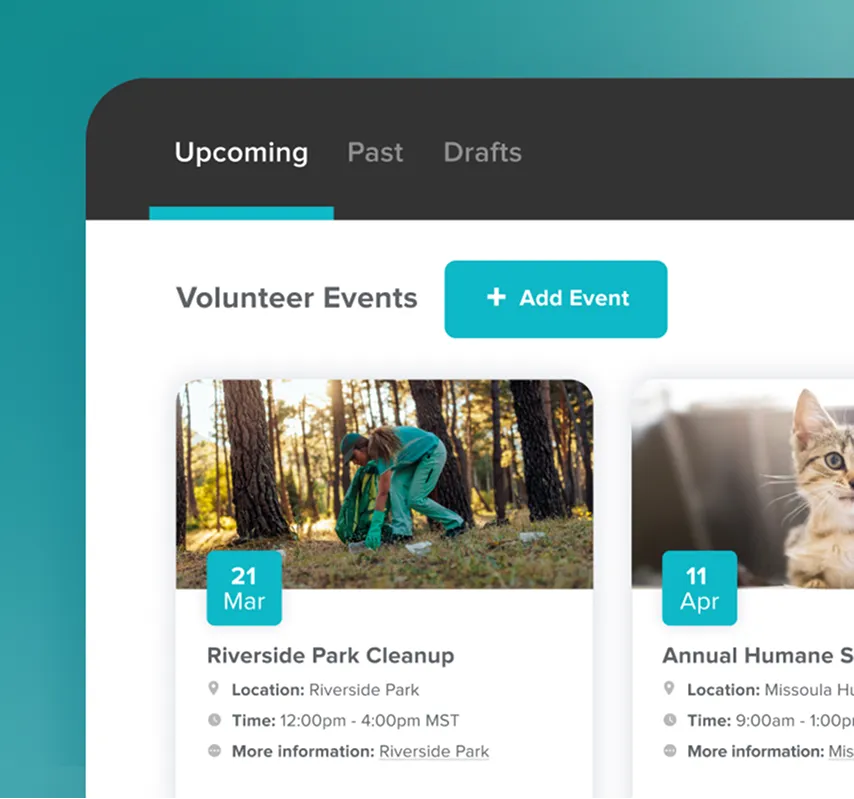
Submittable is a social impact platform that powers your
community investment, employee engagement, and grantmaking
programs. If you want to learn more about how we can help you
and your team do more good, reach out today.